
What Is a Control Joint?
A control joint is a planned groove or separation in concrete that guides shrinkage cracking to a selected line. Concrete changes size as it dries and responds to temperature. The joint creates a weaker path, so cracks are more likely to form there instead of spreading across random areas of a patio.
Quick Facts About Control Joint
Category
Concrete movement joint
Used for
Guiding shrinkage cracks
Common confusion
Often confused with an expansion joint
Also called
Contraction joint
Often discussed with
Concrete Patio Installation, Patio Installation
Key Takeaways About Control Joint
- It creates a planned line for concrete movement.
- Joint placement follows the patio’s shape and layout.
- A control joint is not the same as an expansion joint.
How Control Joint Works
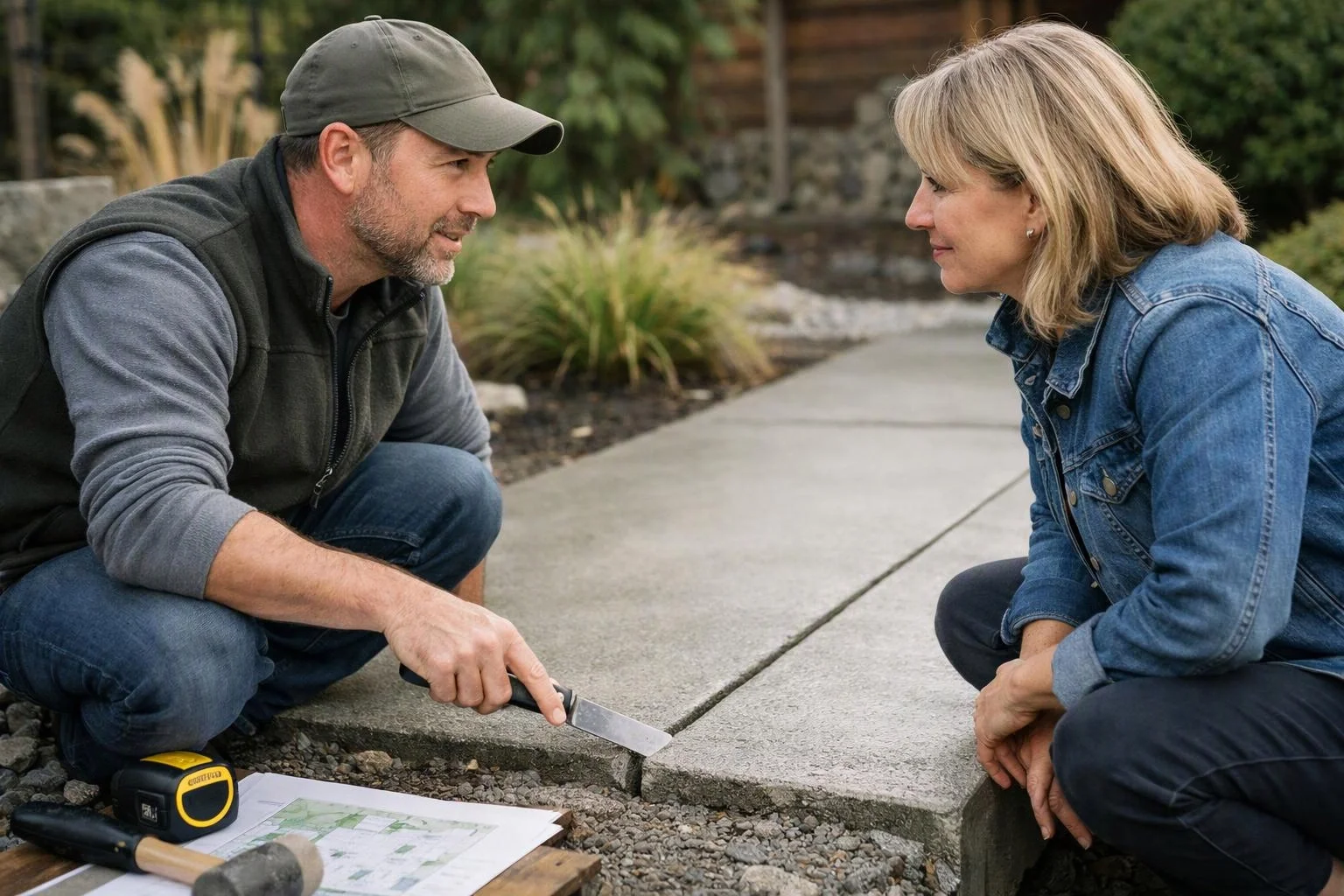
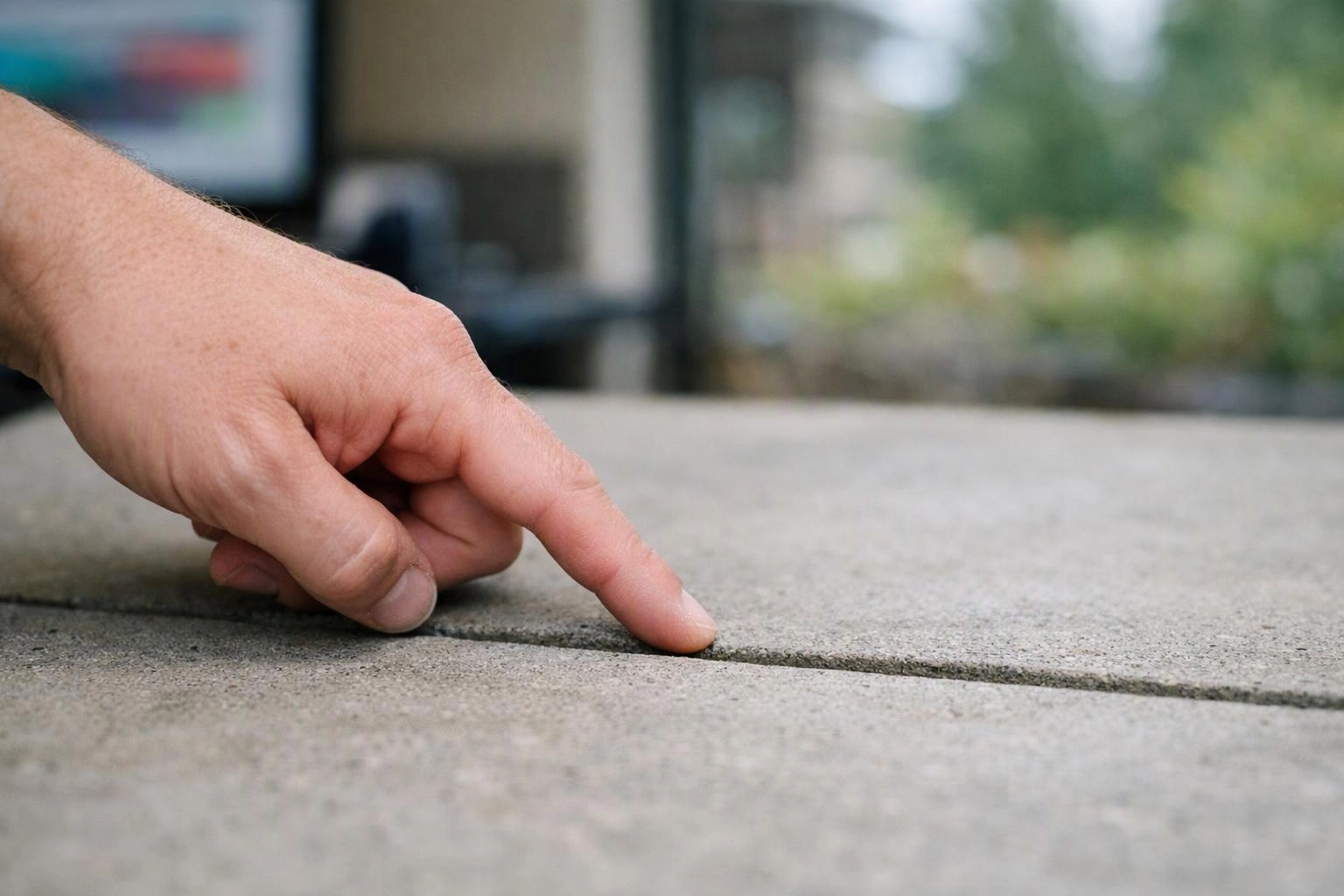
A control joint creates a planned weak line in a concrete slab. As the slab dries or changes temperature, movement can concentrate along that line. The groove or formed separation helps guide a crack so the crack follows the planned path.
Related glossary terms: Concrete Sealer, Hardscape, Soil Compaction.
Joint layout should follow the patio’s shape, corners, and other changes in the slab. Installers may form the line while placing concrete or cut it after the surface gains enough strength. A control joint usually crosses the slab surface and continues through the concrete to guide movement below.
Control Joint and Expansion Joint
An expansion joint separates concrete sections where wider movement may occur. A control joint manages shrinkage within one slab. The two joints serve different purposes, so the joint type should match the patio design and site conditions.
Expert Note
When we plan a concrete patio, we review the slab shape, corners, and connections to nearby surfaces. We place control joints where the layout can guide natural movement without disrupting the patio’s use. Our team also checks that the joint forms a continuous line through the concrete.
Control Joint in Practice: A Real-World Example
A rectangular concrete patio may include a control joint that follows a planned line across the slab. If shrinkage creates a crack, the joint helps keep that crack along the selected path.
Related Services
Related Terms
Concrete Sealer
A concrete sealer is a protective coating or treatment applied to cured concrete. It helps limit…
Hardscape
Hardscape is the built part of a landscape, including patios, walkways, retaining walls, steps, decks, and…
Soil Compaction
Soil Compaction is a condition where soil particles are pressed tightly together, reducing the open spaces…
LandscaperIssaquahwa.com
Have Questions About Control Joint?
Contact LandscaperIssaquahwa.com for practical guidance on Control Joint and related landscape architect company work in Issaquah.