
What Is Composite Decking?
Composite decking is a manufactured deck-board material made from wood fibers, plastic, and binding agents. The boards are formed into consistent shapes and finished with a protective surface. Composite decking is used for walking surfaces, stairs, and other outdoor deck parts. It differs from natural wood because its color and texture are factory made.
Quick Facts About Composite Decking
Category
Deck board material
Used for
Deck surfaces and stairs
Common confusion
Often confused with PVC decking
Also called
Capped composite decking, Composite wood decking
Often discussed with
Deck Installation
Key Takeaways About Composite Decking
- Factory-made boards offer consistent color, shape, and surface texture.
- The material needs a stable frame and properly spaced supports.
- Composite decking is not the same as PVC decking.
How Composite Decking Works
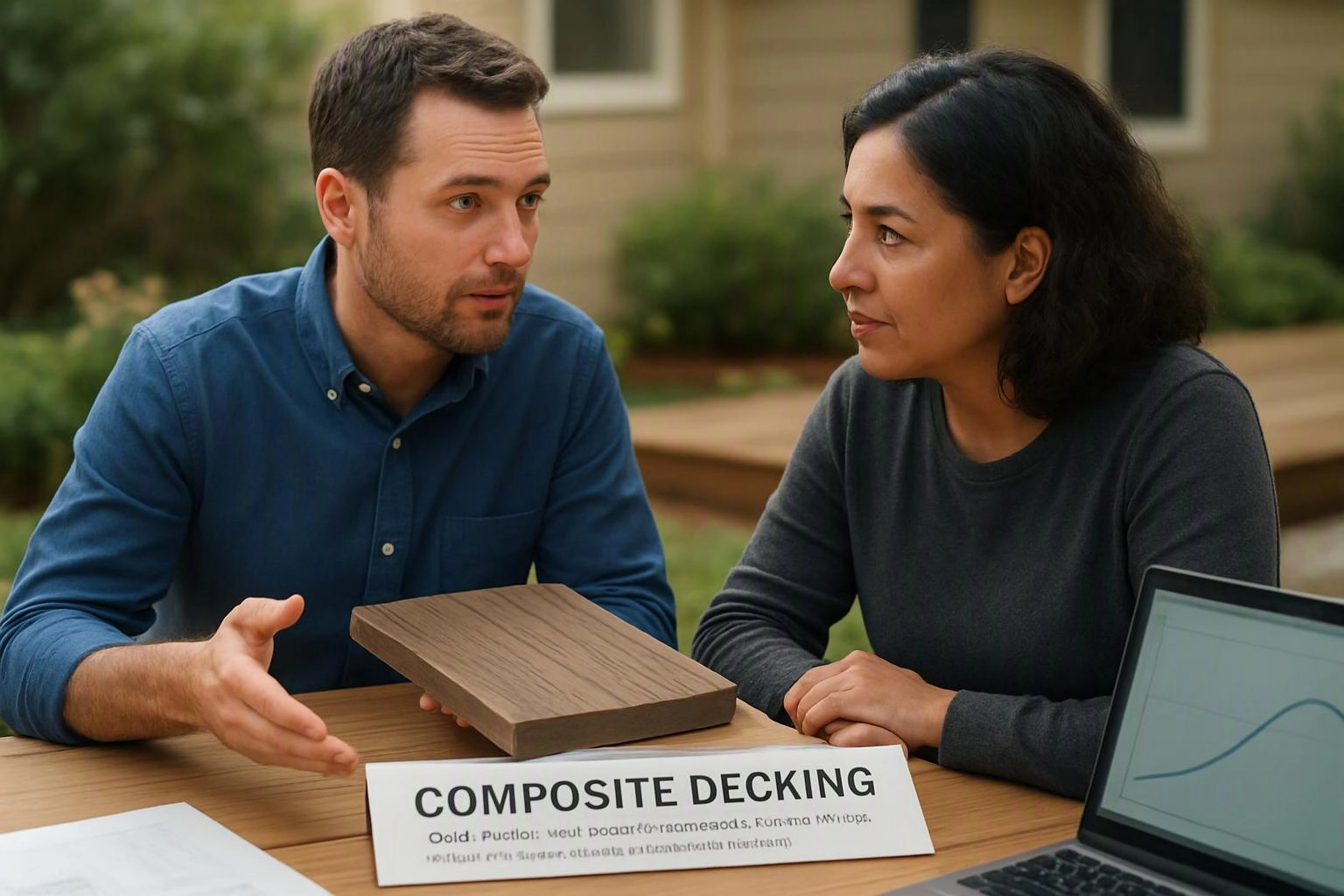
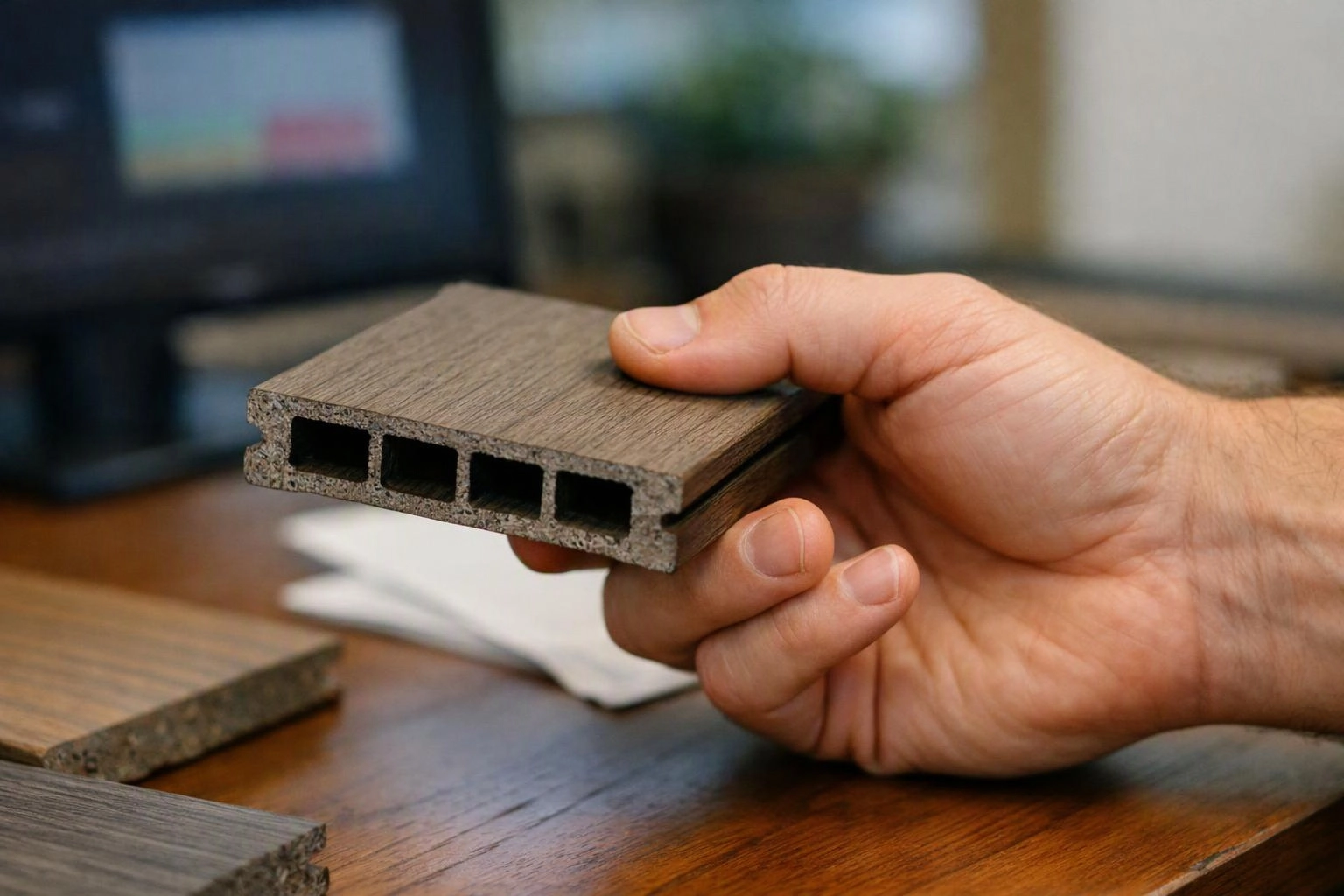
Composite decking uses formed boards that combine wood fibers with plastic. The mix gives each board a steady shape and a finished surface. Some boards have a protective outer layer that helps guard the color and texture.
Related glossary terms: Deck Joist, Deck Railing, Deck Ledger.
Installers fasten the boards to a supporting frame, leaving space for drainage and normal movement. Hidden clips can hold board edges while matching screws may secure visible ends. The finished surface works with deck stairs, edge trim, and deck railing.
Composite boards are cut with standard woodworking tools, but the installer follows the product’s instructions for spacing and fasteners. The frame must support the boards and keep the walking surface even. Good layout also helps the deck shed rain.
Expert Note
When we plan composite decking, we check the frame layout, board direction, drainage, and stair transitions. We also review edge details and fastener placement so the finished surface looks even and handles regular outdoor use.
Composite Decking in Practice: A Real-World Example
A homeowner in Issaquah may choose composite decking for a raised backyard deck beside a garden. The installation plan can match the deck boards with stairs, trim, and railing while keeping rainwater moving away from the structure.
Related Services
Related Terms
Deck Joist
Deck Joist is a horizontal framing member that supports deck boards and transfers their load to…
Deck Railing
Deck Railing is a barrier installed along the open edges of a raised deck, stair, or…
Deck Ledger
Deck Ledger is a horizontal board that attaches a deck to a building and supports the…
Deck Post
A Deck Post is a vertical support that carries a deck’s framing and transfers its weight…
LandscaperIssaquahwa.com
Have Questions About Composite Decking?
Contact LandscaperIssaquahwa.com for practical guidance on Composite Decking and related landscape architect company work in Issaquah.