
What Is a Rain Sensor?
A rain sensor is an irrigation control device that detects rainfall and signals the sprinkler controller to pause watering. The sensor helps prevent irrigation during or after natural rain. It usually works with an automatic irrigation system and can be mounted outdoors where it receives open exposure to the weather.
Quick Facts About Rain Sensor
Category
Irrigation control component
Used for
Pausing sprinklers during rainfall
Common confusion
Rain detection is not soil moisture testing
Also called
Irrigation rain sensor, Rain shutoff sensor
Often discussed with
Sprinkler Repair
Key Takeaways About Rain Sensor
- It responds to rainfall, not soil moisture.
- A sensor must connect correctly to the irrigation controller.
- It is not the same as a soil moisture sensor.
How Rain Sensor Works
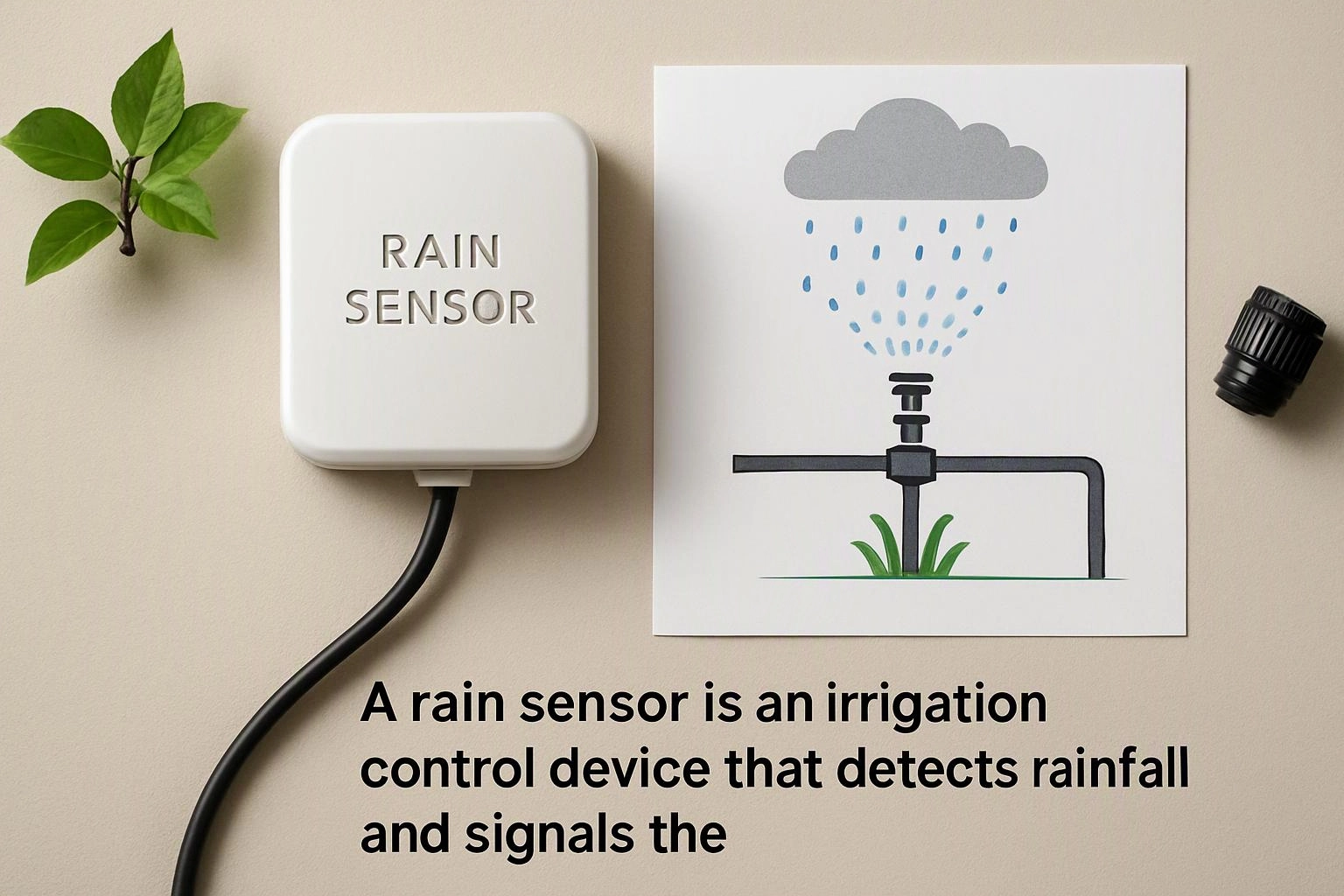
A rain sensor detects water from rainfall and sends a signal to the irrigation controller. The controller then suspends scheduled sprinkler cycles while the sensor remains wet. Some models use a moisture-absorbing disk, while others measure rain through electronic components.
Related glossary terms: Irrigation Controller, Drip Irrigation, Rain Barrel.
Placement affects the sensor's reading. The device needs open exposure to rain, so leaves, roof edges, and spray from sprinklers can cause false readings. During sprinkler repair, a technician checks the sensor, its wiring, and the controller connection. The technician also confirms that the system resumes normal watering after the sensor dries.
Rain Sensor and Irrigation Controllers
An irrigation controller follows the sensor's signal during scheduled watering. A working connection can stop unnecessary cycles, but it cannot correct blocked sprinkler heads, broken pipes, or poor coverage.
Expert Note
When we inspect a rain sensor, we check its mounting position, wiring, and connection at the irrigation controller. We also test whether the controller pauses and resumes watering as expected. A sensor can appear intact while a loose wire or blocked exposure point prevents a useful signal.
Rain Sensor in Practice: A Real-World Example
A home sprinkler system is scheduled to water after a rainy day. The rain sensor detects the rainfall and tells the controller to skip that cycle, so the sprinklers do not add water immediately.
Related Services
Related Terms
Irrigation Controller
An irrigation controller is an electronic device that starts and stops watering zones on a set…
Drip Irrigation
Drip Irrigation is a watering system that delivers water slowly through small emitters placed along tubing…
Rain Barrel
A Rain Barrel is a container that collects runoff from a roof or downspout for later…
LandscaperIssaquahwa.com
Have Questions About Rain Sensor?
Contact LandscaperIssaquahwa.com for practical guidance on Rain Sensor and related landscape architect company work in Issaquah.