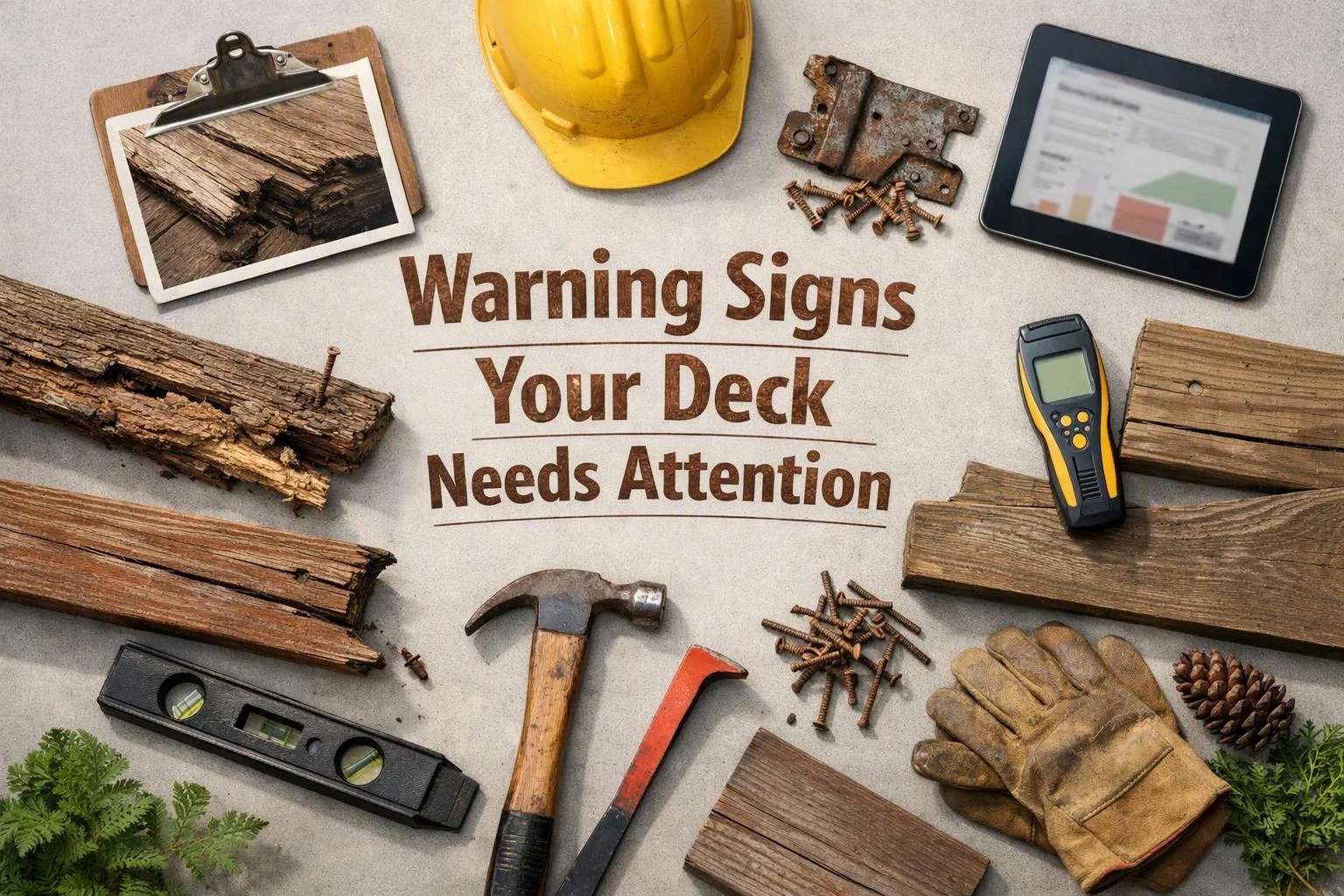
Warning Signs Your Deck Needs Attention
Deck replacement warning signs include widespread rot, unstable framing, moving railings, failing stairs, and persistent bounce. At LandscaperIssaquahwa.com, we can assess the deck and explain whether repair or replacement fits its condition.
Written by Adam Gorski · 29 years of local experience
Request an EstimateWhich Warning Signs Mean Your Deck Needs Attention?
Decks need attention when damage affects the structure, walking surface, stairs, or fall protection.
These unsafe deck signs can appear together. A surface problem may also point to hidden damage below the deck.
How Can You Tell If Your Deck Has Wood Rot?
Wood rot makes deck lumber soft, crumbly, discolored, or easy to damage with light pressure.
Soft wood often develops where moisture stays trapped. Look for dark or faded areas, fungal decay, and surfaces that break apart easily.
Rot can affect support posts, joists, and the ledger board. Water damage near a connection deserves close attention because it can weaken load support.
Our team checks visible wood and the areas where moisture commonly collects. We also look for drainage problems that may keep the deck wet.
Why Does a Deck Feel Unstable or Bouncy?
A bouncy deck can point to weakened framing, loose connections, damaged supports, or movement at the foundation.
Deck framing carries the weight of the surface and its users. Weak joists, beams, or support posts can make the walking surface move under normal use.
Footings may shift when soil moves or water changes conditions around the supports. A loose ledger connection can also allow movement where the deck meets the building.
Our structural review follows the movement through the deck. We check how the joists, beams, posts, footings, and ledger connection work together.
What Do Moving Railings and Stairs Mean?
Moving railings or stairs signal a safety problem that needs prompt assessment before the deck is used normally.
A wobbly railing may involve loose posts, fasteners, or connections. The deck railing, guardrail, and handrail all support fall protection.
Moving stairs may have loose stair treads or damaged stair stringers. Stair movement can also connect to framing or support problems below.
Don't rely on a quick tightening if the surrounding wood is damaged. Our crew checks the full connection and explains whether repair or replacement supports safe deck use.
Should You Repair the Deck or Replace It?
Repair suits isolated damage, while replacement makes more sense when deterioration affects several structural parts.
Deck repair may fit localized damage in a board, fastener, railing connection, or small framing area. The remaining structure must still have sound support and safe connections.
Deck replacement becomes more practical when wood rot, water damage, and structural damage spread across the deck. Replacement planning can address the surface, structural framing, stairs, railing, and drainage together.
Our team considers the condition of the deck boards, joists, beams, posts, footings, and ledger board. We then define a project scope that matches the deck’s actual condition.
When the structure needs a new plan, our Deck Installation service can support the next stage.
DIY Checks Compared With Our Deck Assessment
Safe visual checks can help you notice deck damage early. They can't confirm the condition of hidden structural framing or connections.
Our assessment connects visible symptoms with the cause and the likely replacement scope.
| Factor | What you can do yourself | What we do |
|---|---|---|
| Visual inspection | Look for soft wood, discoloration, cracks, and visible movement. | Trace symptoms across the deck and identify likely causes. |
| Surface boards | Note cracked boards, split boards, loose screws, and soft areas. | Assess whether board damage is localized or linked to framing. |
| Deck railing | Notice a wobbly railing without forcing the connection. | Review posts, fasteners, connections, and fall protection. |
| Deck stairs | Watch for moving stairs, damaged treads, or visible gaps. | Check stair stringers, supports, treads, and connections. |
| Structural framing | Stay on the surface and avoid unsafe access below. | Review joists, beams, support posts, footings, and the ledger connection. |
| Replacement assessment | Record concerns with notes or photos from a safe location. | Set a repair or replacement direction based on condition. |
| Deck installation | Plan your needs, access, layout, and preferred materials. | Develop the installation scope and coordinate the build plan. |
Don't climb, pry, or remove structural parts to investigate damage. If movement feels unsafe, restrict use and let our team handle the assessment.
How We Plan the Right Deck Replacement
Our deck replacement process begins with the deck’s condition and ends with a clear project quote.
Our team can also explain which existing parts may remain useful. That helps keep the replacement assessment focused on real condition problems.
What Should You Do After Finding Deck Damage?
Stop using areas that feel unsafe and contact LandscaperIssaquahwa.com for a condition review and replacement guidance.
Keep people away from moving stairs, loose railings, sagging areas, and surfaces with severe rot. Use temporary precautions that don't add weight or stress to the deck.
Don't cover damaged boards before the cause is understood. Moisture damage can continue below a new surface when drainage or structural movement remains unresolved.
Our team can complete a deck inspection and explain the next practical step. You can contact our team for a replacement consultation.
Questions About Deck Damage and Replacement
Can a deck be unsafe even when the boards look fine?
Yes, a deck can be unsafe when hidden framing, supports, or connections are damaged. Our team checks below the walking surface when movement, sagging, or water damage suggests a deeper problem.
What should I do if my deck railing suddenly becomes loose?
Stop using that section and keep people away from the edge. Our team should assess the railing post, fasteners, surrounding wood, and underlying framing before normal use continues.
Can replacing deck boards fix a deck with damaged framing?
No, new deck boards don't correct damaged framing. Our team reviews the joists, beams, posts, and connections first so the replacement surface has sound support.
How does water damage affect a deck's support structure?
Water damage can soften wood and weaken connections around joists, beams, posts, footings, and the ledger board. Our team checks moisture paths and drainage so the repair or replacement addresses the source.
Author: Adam Gorski