Warning Signs Your Retaining Wall Needs Attention
Retaining wall failure warning signs include leaning, bulging, cracking, soil washing out, drainage changes, and wall movement. LandscaperIssaquahwa.com explains what these signs mean and how our team assesses the wall safely.
Written by Adam Gorski · 29 years of local experience
Request an Estimate
Which Warning Signs Show That a Retaining Wall Needs Attention?
A retaining wall needs attention when visible movement, cracking, water problems, or soil loss changes its original shape or support. These warning signs can point to structural distress, drainage trouble, or changing soil pressure.
Our team looks at the full wall system, including the backfill, drainage path, wall foundation, and nearby ground. Early assessment can help identify the cause before movement affects other landscape features.
Leaning or Tilting Toward the Open Side
A leaning retaining wall may be responding to lateral soil pressure behind it. Wall leaning can also indicate a weakened footing, foundation settlement, or a retaining wall failure in progress.
Small changes can be difficult to judge by eye. We check the wall alignment and surrounding grade to see whether movement is active or tied to an older condition.
Bulging, Bowing, or Uneven Wall Sections
A bulging retaining wall often shows that backfill pressure is pushing unevenly against the wall. A bowing wall may have poor drainage, shifting soil, or construction materials that no longer provide enough support.
Uneven sections can reveal where wall alignment has changed. Our team reviews the face, joints, backfill, and soil pressure together.
New Cracks in Blocks, Mortar, Concrete, or Soil
New retaining wall cracks can point to movement, settlement, or stress within the wall system. Cracks may appear across wall blocks, along mortar joints, through a concrete wall, or in soil above the wall.
The crack pattern matters as much as the crack itself. We check whether cracks connect with leaning, bulging, drainage changes, or foundation settlement.
Soil Washing Through the Wall or Around Its Base
Soil washing through retaining wall joints means water is carrying backfill through openings in the wall. Soil loss around the wall base can also remove support from the footing.
Soil erosion may come from surface runoff, a damaged drainage path, or water moving through the backfill. Our team traces where the soil starts and where the water travels.
Water Coming Through Joints or Collecting Behind the Wall
Water seepage through wall joints can show that retaining wall drainage is not releasing water properly. Trapped water creates hydrostatic pressure, which can push the wall outward.
We look for blocked or missing drainage outlets, wet backfill, and changes in surface runoff. Water patterns can also connect to wider yard concerns described in Signs Your Yard Has a Drainage Problem.
Gaps, Separation, or Movement Near Nearby Surfaces
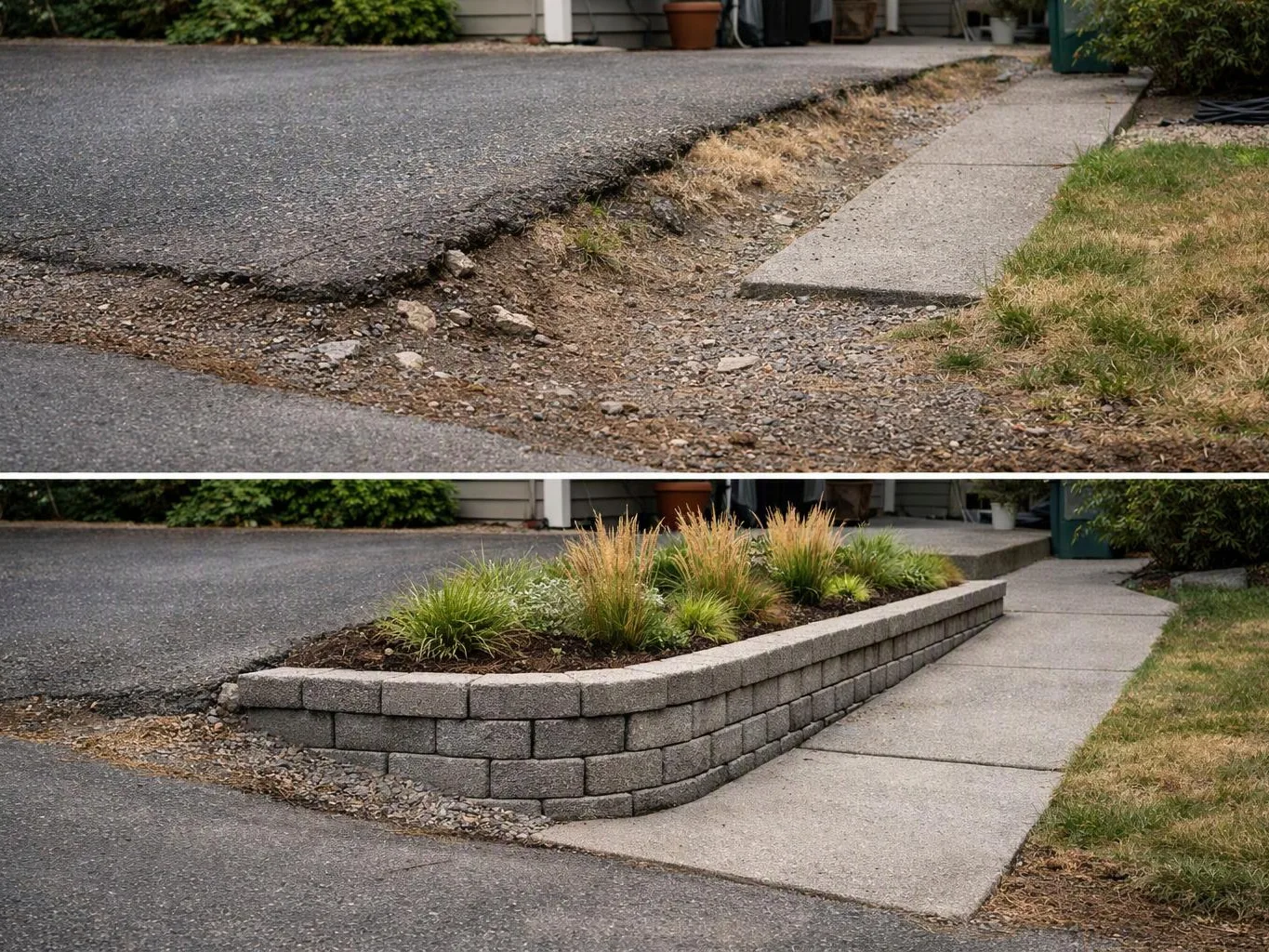
Wall separation from a sidewalk, driveway, patio, or fence can show that the retaining wall or nearby soil is moving. Gaps may also form when the wall settles while a nearby surface stays in place.
We check whether the separation begins at the wall, the surface, or the slope. That distinction helps guide a safer wall assessment.
Why Is a Retaining Wall Leaning, Bulging, or Cracking?
A retaining wall usually leans, bulges, or cracks when soil pressure, water pressure, settlement, or material failure exceeds the wall's support.
Poor drainage can saturate soil behind the wall and increase lateral earth pressure. Foundation settlement can change the wall alignment, while unsuitable construction materials or wall design can reduce long-term stability.
We assess the wall face, footing, backfill, drainage, and slope movement as one system. Fixing only the visible crack may leave the main cause in place.
What Does Erosion Behind a Retaining Wall Mean?
Erosion behind a retaining wall means water is carrying soil away from the backfill or foundation area, which can weaken wall support.
Surface runoff may enter the backfill and create a hidden drainage path. Soil migration can leave voids behind the wall, even when the face still looks mostly intact.
We look for loose soil, hollow areas, damp spots, exposed wall parts, and soil washing through joints. These signs help us connect erosion with drainage and slope stability.
How We Check a Retaining Wall's Warning Signs
A retaining wall inspection compares the wall's current condition with its alignment, support, and drainage needs. Our team follows a clear visual process before recommending corrective work.
At LandscaperIssaquahwa.com, we document the visible causes before planning the work. Our assessment focuses on safe access, stable soil, and the conditions that support the wall.
What You Can Check Yourself and What We Handle
A retaining wall assessment starts with safe visual checks, while structural evaluation and corrective work require our team. You can observe changes from stable ground, but you shouldn't disturb an unstable wall or dig beside its foundation.
The table below separates low-risk observations from work we handle as part of repair or retaining wall installation.
| Factor | What you can do yourself | What we do |
|---|---|---|
| Visual condition | Observe leaning, bulging, cracks, gaps, and falling materials from a safe location. | Review wall alignment, movement patterns, and visible structural distress. |
| Drainage review | Note wet soil, standing water, blocked outlets, and changing runoff. | Trace drainage paths and assess water pressure behind the wall. |
| Soil condition | Watch for soil loss, washouts, exposed areas, and new voids. | Evaluate backfill, erosion, foundation support, and slope movement. |
| Corrective work | Keep people and heavy activity away from unsafe areas. | Plan drainage work, repair, replacement, grading, or new installation. |
When Should You Stop Using the Area Near a Retaining Wall?
You should keep people and heavy activity away from a retaining wall with sudden movement, severe bulging, falling materials, or growing voids.
An unstable retaining wall can affect slope safety and property safety. Keep vehicles, stored materials, children, and pets away from the area until our team can assess the condition.
Don't climb on the wall, remove blocks, dig near the wall foundation, or try to push the wall back. Contact us when the wall shows fast movement or threatens a nearby structure.
How We Plan Retaining Wall Installation or Corrective Work
Retaining wall installation or corrective work begins with the wall's cause of movement, drainage needs, and site conditions. Our team plans the solution around stable support, proper backfill, and safe water release.
We may recommend repair when the wall structure and foundation remain suitable. Wall replacement may make more sense when movement, erosion, or material failure affects the core support system.
Our plan can include drainage design, foundation preparation, backfill selection, and site grading. For a new or rebuilt structure, our Retaining Wall Installation service addresses the wall and the surrounding ground as one project.
We explain the planned work, the conditions it addresses, and what the quote includes. Contact our team to request a quote for your retaining wall needs.
Adam Gorski provides this guide as part of our practical landscape structure guidance.
Questions About Retaining Wall Warning Signs
Can a leaning retaining wall be repaired?
Yes, a leaning retaining wall can be repaired when its foundation and main structure can still support corrective work. We check the cause of movement, soil pressure, drainage, and footing condition before choosing repair or replacement.
Why is my retaining wall separating from the ground?
A retaining wall may separate from the ground because of settlement, soil movement, erosion, or changing drainage. We inspect the gap with the wall base and nearby slope to identify which condition is driving the separation.
Can blocked drainage cause retaining wall failure?
Yes, blocked drainage can cause retaining wall failure by trapping water behind the wall. The resulting hydrostatic pressure can push against the wall and worsen leaning, bulging, cracks, and separation.
Should I replace a retaining wall with severe cracks?
Severe retaining wall cracks should be assessed before you decide on replacement. We review the crack pattern, wall movement, drainage, backfill, and foundation to determine whether corrective work can restore support.
Contact our team to discuss visible retaining wall movement, drainage problems, or soil loss.
Get a Free Estimate