
What Is a Catch Basin?
A catch basin is a landscape drainage box with a grated cover, a sump, and an outlet pipe. Surface water enters through the grate, while soil and debris settle below the outlet. The pipe carries clearer water away from paved areas, planting beds, or low spots, helping direct runoff into a planned drainage system.
Quick Facts About Catch Basin
Category
Surface drainage component
Used for
Collecting and routing runoff
Common confusion
Often confused with a French drain
Also called
Drain basin, Storm drain basin
Often discussed with
Drainage Solutions
Key Takeaways About Catch Basin
- A grated cover distinguishes a catch basin from buried drainage pipe.
- The sump holds sediment before runoff reaches the outlet pipe.
- A catch basin is not the same as a French drain.
How Catch Basin Works
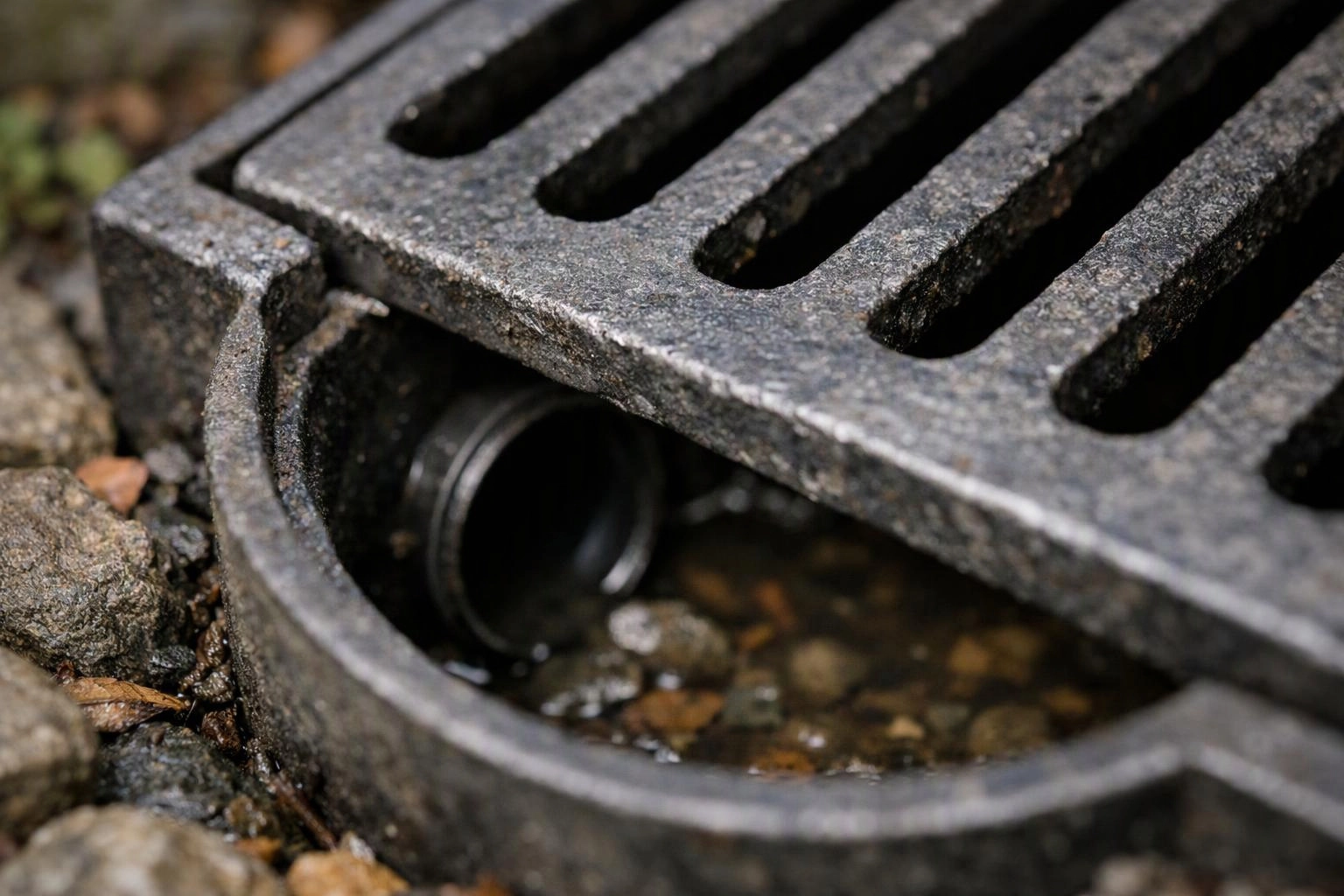
A catch basin receives runoff through a metal or plastic grate. Water drops into the box, and the sump gives soil, leaves, and gravel space to settle. The outlet sits above much of that settled material.
Related glossary terms: Underdrain, Grading, Swale.
An outlet pipe carries collected water toward an approved discharge area or another drainage feature. The grate allows surface access for inspection and cleaning. A catch basin works as part of a larger drainage layout, so its position, pipe slope, and discharge point affect performance.
Catch Basin and French Drain
A French drain collects water below the soil through perforated pipe and rock. A catch basin collects water at the surface. Some drainage plans use both components to manage water above and below grade.
Expert Note
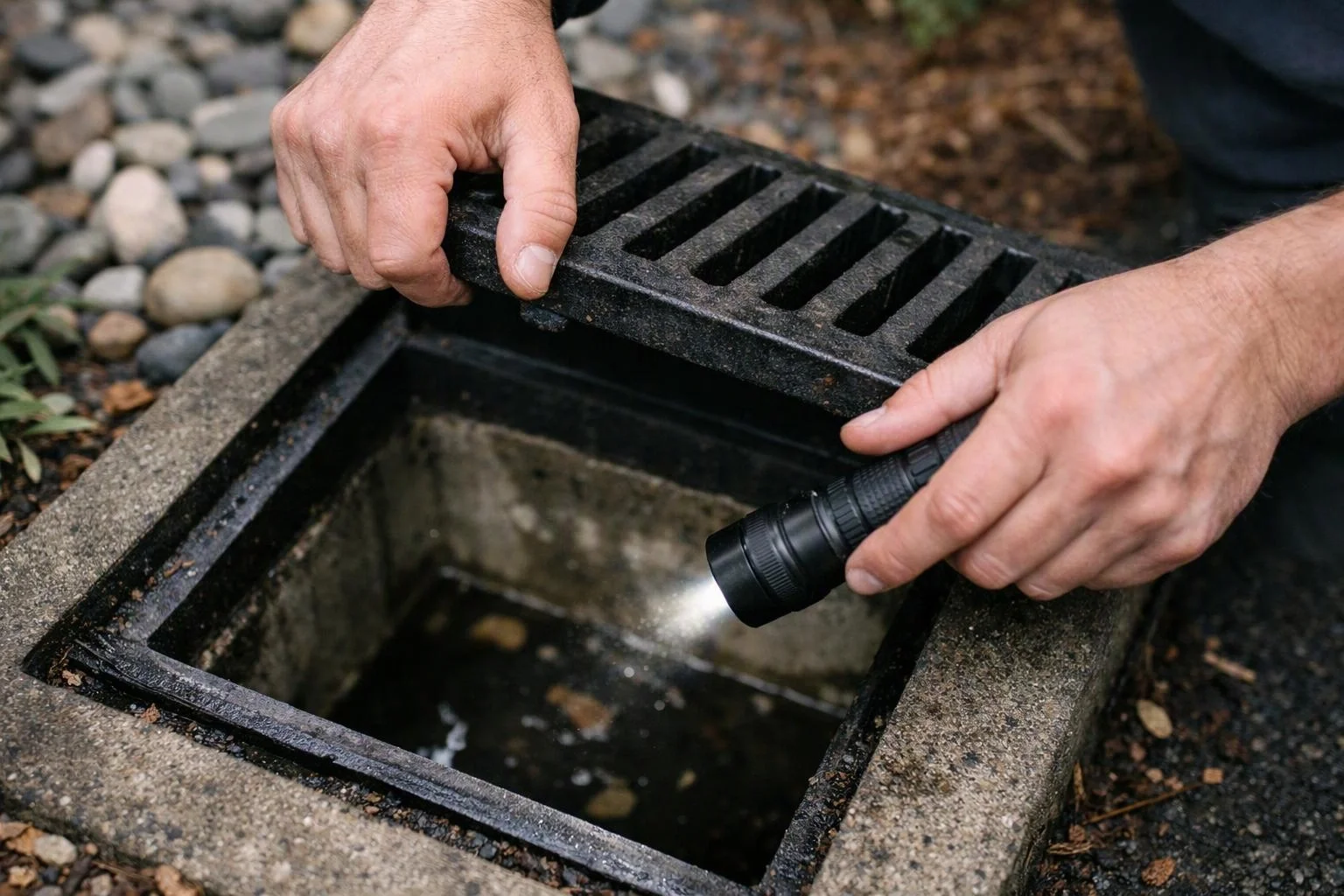
When we plan drainage work, we place catch basins where runoff gathers and where maintenance access remains practical. We check the grate, sump, outlet connection, pipe slope, and discharge area. Our team also looks for sediment buildup and blockages that could reduce flow.
Catch Basin in Practice: A Real-World Example
A sloped patio may send rainwater toward a low planting bed. A catch basin at that low point can collect the runoff and route it through an outlet pipe toward a suitable drainage area.
Related Services
Related Terms
Underdrain
An underdrain is a buried drainage system that collects excess water below the soil surface and…
Grading
Grading is the planned shaping of soil to create useful slopes and level areas on a…
Swale
A swale is a shallow, sloped channel that guides and slows stormwater across a landscape. It…
LandscaperIssaquahwa.com
Have Questions About Catch Basin?
Contact LandscaperIssaquahwa.com for practical guidance on Catch Basin and related landscape architect company work in Issaquah.