
What Is an Underdrain?
An underdrain is a buried drainage system that collects excess water below the soil surface and carries it to a safe outlet. It usually includes perforated pipe, washed gravel, and filter fabric. Underdrains help control groundwater, protect planting areas, and reduce saturation beneath lawns, paths, walls, or other landscape features.
Quick Facts About Underdrain
Category
Subsurface drainage system
Used for
Removing trapped soil water
Common confusion
Different from a surface drain
Also called
Subsurface drain, Subsurface drainage pipe
Often discussed with
Drainage Solutions, French Drain Installation
Key Takeaways About Underdrain
- Perforated pipe collects water below the surface.
- Gravel and filter fabric help keep the pipe open.
- An underdrain is not the same as a surface catch basin.
How Underdrain Works
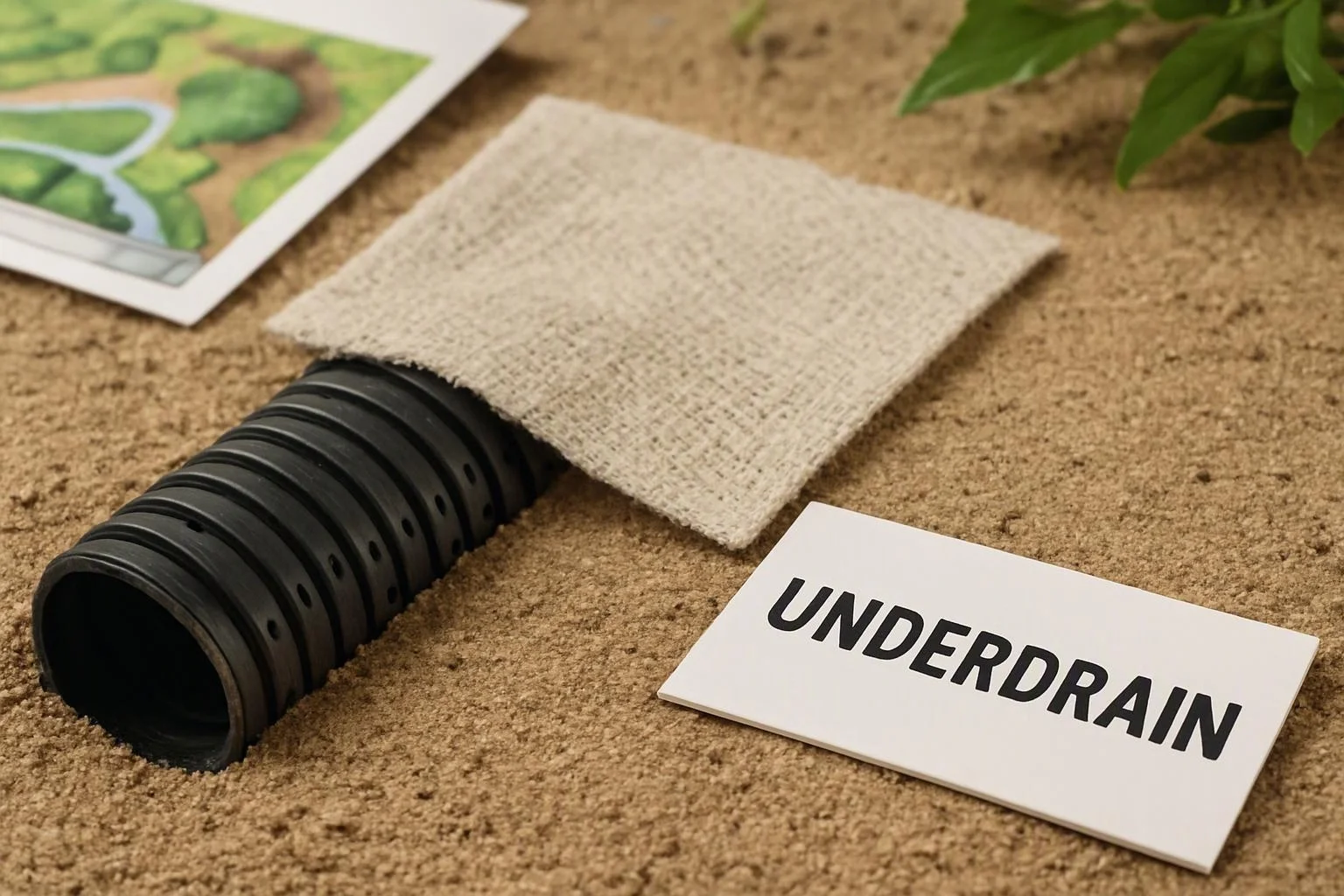
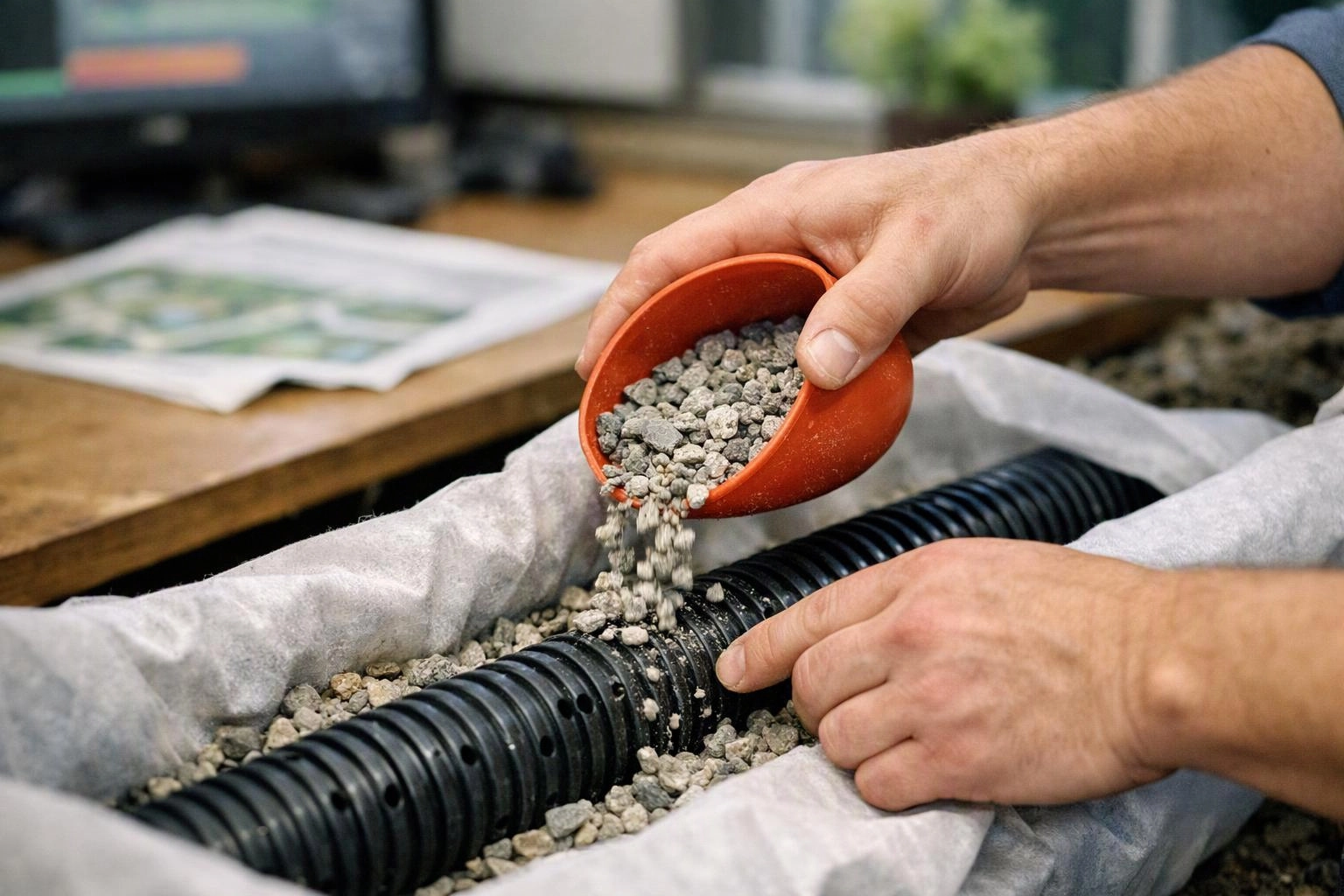
An underdrain collects water through small openings in buried pipe. The pipe sits in washed gravel, which gives water space to move toward it. Filter fabric can surround the gravel and help keep soil from entering the system.
Related glossary terms: Catch Basin, Geotextile Fabric, Grading.
Water reaches the pipe through wet soil and then flows toward an approved outlet. The outlet may connect to a drainage line, daylight at a lower point, or discharge into another planned drainage feature. The system's slope and outlet location control how well water leaves the area.
Where Underdrains Are Used
- French drains and planting beds with poor drainage.
- Areas beside retaining walls or paved surfaces.
- Lawns and soil that stay saturated after rain.
Expert Note
When we plan an underdrain, we trace where water collects and identify a suitable outlet. Our team checks the soil, pipe path, gravel layer, and connection points so the system supports the surrounding landscape. We also consider how surface grading works with the buried drainage.
Underdrain in Practice: A Real-World Example
A sloped planting bed beside a walkway stays wet after rain, and the soil begins to soften. An underdrain beneath the bed can collect that water and direct it toward a planned drainage outlet.
Related Services
Related Terms
Catch Basin
A catch basin is a landscape drainage box with a grated cover, a sump, and an…
Geotextile Fabric
Geotextile Fabric is a synthetic textile placed in soil to separate, filter, reinforce, or protect ground…
Grading
Grading is the planned shaping of soil to create useful slopes and level areas on a…
LandscaperIssaquahwa.com
Have Questions About Underdrain?
Contact LandscaperIssaquahwa.com for practical guidance on Underdrain and related landscape architect company work in Issaquah.