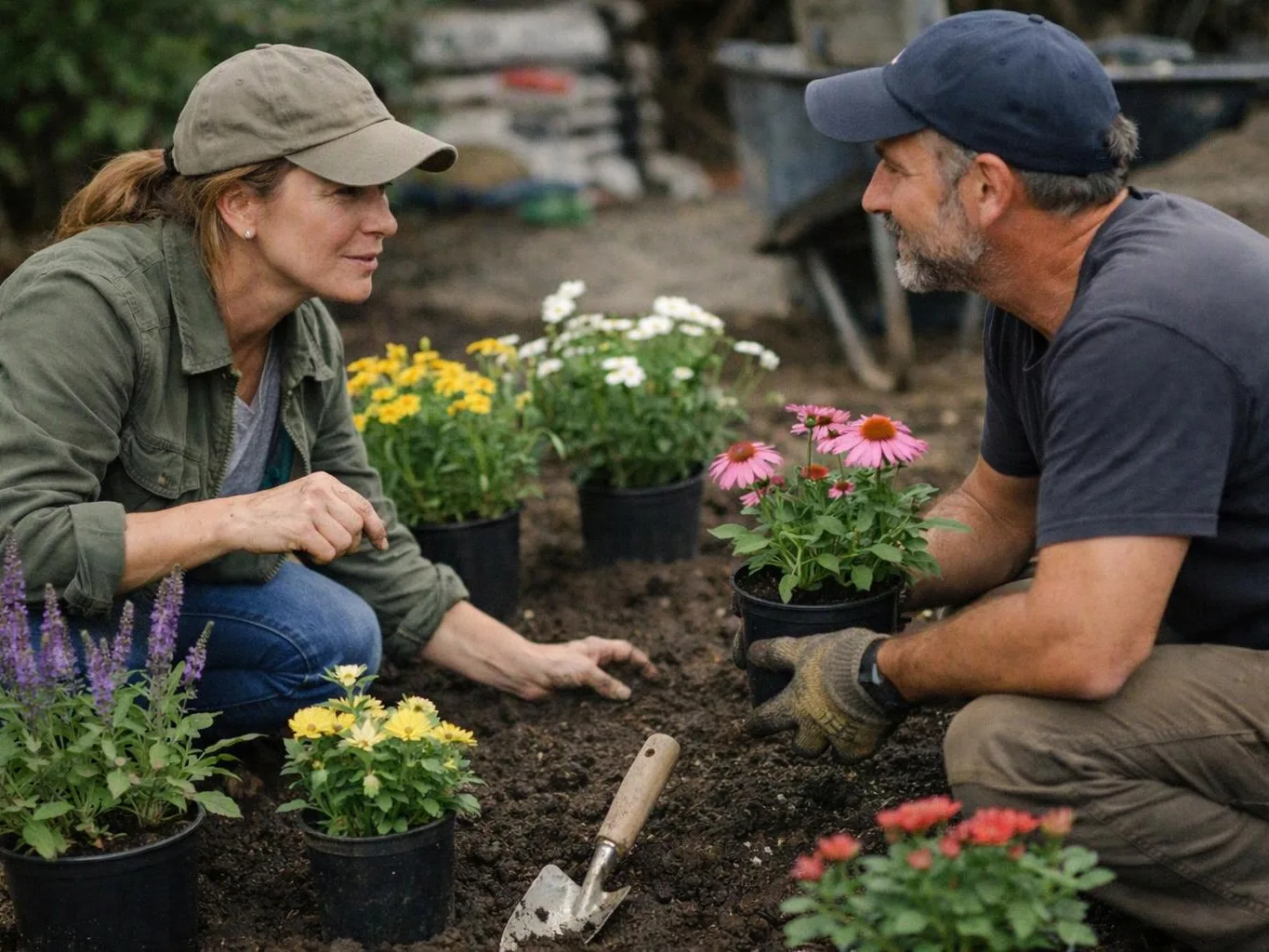
Trace the water problem
We inspect the wet area, nearby grades, soil, structures, paths, and likely water entry points.
We plan drainage work around your soil, slope, and water path. Our landscape architect-led design connects the drain with the rest of your property.
A French drain moves collected water away from low areas and vulnerable parts of the property.
The buried route keeps drainage below walking areas and planting spaces.
A site-specific layout helps avoid paying for trenching that does not address the water source.
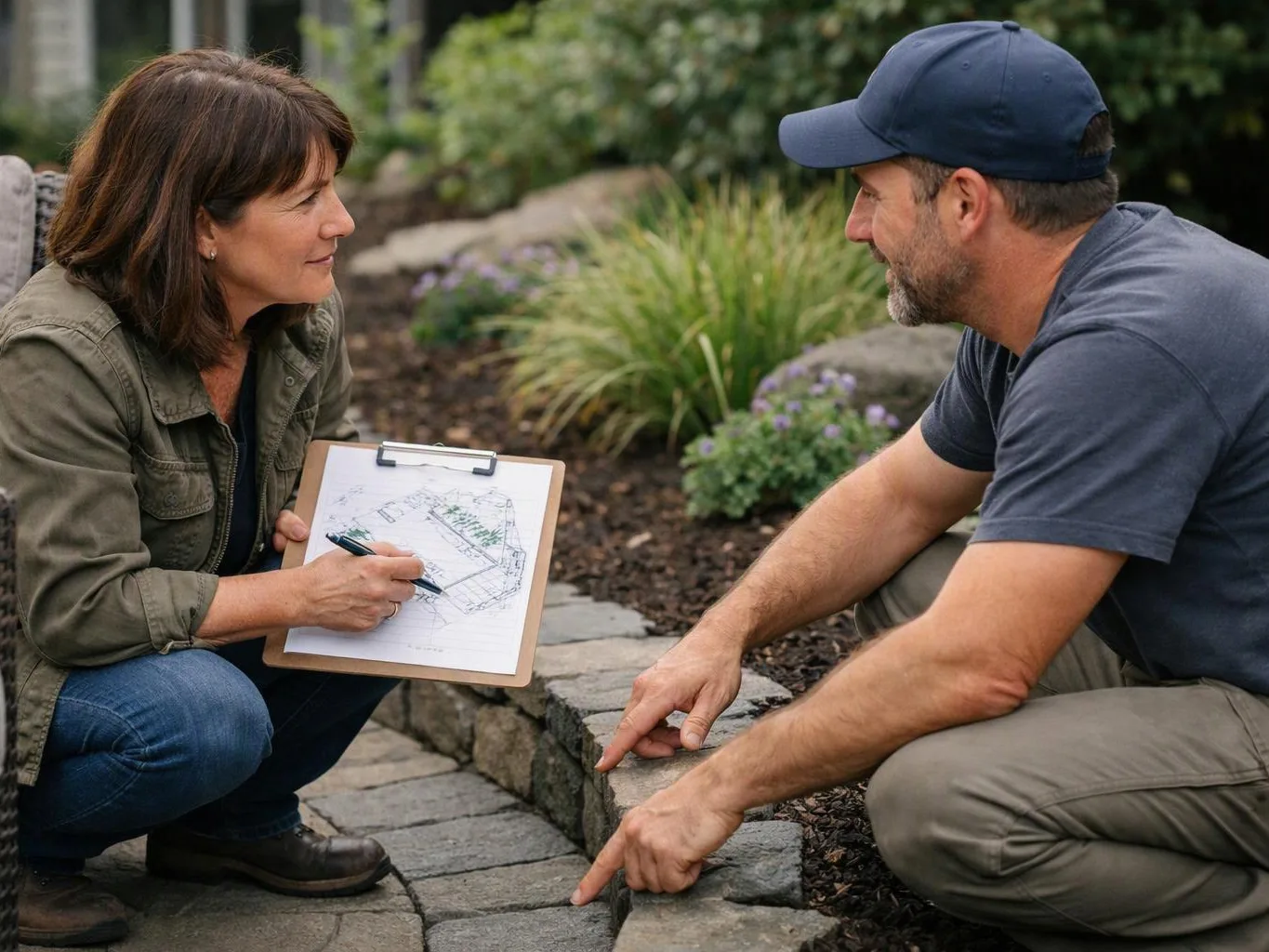
A French drain collects water below grade and moves it through a planned path. The system normally includes a trench, drainage gravel, perforated pipe, and a suitable outlet. The work starts with the problem area, not a fixed trench pattern. We look at soil, slope, grading, nearby structures, planting beds, patios, and paths. Those details help us decide where water enters and where it can safely leave. Cost rises when access is tight, excavation crosses hardscape, soil needs removal, or the outlet needs extra work. Budgets can also suffer when a drain is placed without tracing the full flow path. We focus the plan on the source, collection route, and outlet before construction begins.
French Drain Installation is a buried drainage system that collects water through gravel and perforated pipe.
We inspect the wet area, nearby grades, soil, structures, paths, and likely water entry points.
We plan where water enters the drain, how the perforated pipe runs, and where the outlet can discharge.
We account for drainage gravel, pipe, excavation access, hardscape crossings, planting areas, and soil handling.
We prepare the trench, place the drainage materials, connect the planned route, and restore affected areas.
A few details help us understand the water problem before we plan the drain.
We present the drainage route, pipe plan, outlet approach, access needs, and restoration scope before work begins.
We align the French drain route and materials with each property's soil, slope, hardscape, planting, and budget.
We coordinate drainage placement with planned planting, hardscape, lighting, and other outdoor elements on the property.

We recently had Adam help us with two big yard projects. For our primary home we had a goal of making our property lower maintenance so Adam designed a beautiful plan to bring in character with large rocks and appropriate ground cover and plants to replace all of the grass that we took out in the front yard and he and his team replaced our backyard grass with beautiful artificial turf that looks like perfectly cut grass. We are thrilled with the results and can’t say enough about how great Adam was to work with. He was very organized, had great communication and check ins and did exactly what he said he would do, and his team of workers were so respectful of property and easy to work with. After such a great experience we had him also help re design and improve our Suncadia yard to make it fit in more with the mountain landscape. All Projects were finished ahead of deadlines for some key entertaining events we had planned!

I had a great experience with Adam Gorski Landscapes. I'm not big on writing reviews, but this company deserves one! From design to build, the process was flawless. Adam and his team exceeded expectations at every turn. We were honest about our budget, and there was no pressure to go over. That was big for us, and something we didn't find with other companies. Equally important was timing and professionalism. They showed up when they said they would, left the site organized and presentable every day, and finished on time and on budget. The work done was amazing, we get compliments on it over and over! I would recommend Adam and his team to friends and family. If you read this and engage with him, you won't be disappointed.

Adam Gorski Landscapes is top notch. He collaborates with each customer to create the perfect environment for their needs. Quality and creativity are foremost in design and completion of each project.
Get a site-specific estimate for a drainage route that addresses standing water, soil, slope, and the planned outlet in Issaquah.
Water that gathers near a foundation needs more than a surface patch. Soil, grade, and the proposed outlet decide whether a buried drain fits. Take photos during or after rain, then mark where water starts and where it collects. We can use those details during the site review and shape the drainage route around the property.
A muddy path can show that runoff crosses the route before it reaches a suitable outlet. The drain must collect water uphill from the path without creating a new problem near planting beds or hardscape. Note the path's low points and nearby grades before requesting an estimate, so we can assess access and excavation needs.
If water returns after grading or surface work, the hidden flow path may still be active. A French drain only helps when its inlet, pipe route, and outlet match the site's movement of water. Gather details about the earlier repair and the areas that remain wet. We can then compare the existing grade with a buried collection route.