
What Is Grading?
Grading is the planned shaping of soil to create useful slopes and level areas on a landscape site. It directs rainwater away from buildings, patios, and walkways while supporting stable surfaces. Landscape designers use grading plans to show how the finished ground should rise, fall, and connect with nearby features.
Quick Facts About Grading
Category
Site preparation
Used for
Slopes, drainage, and level areas
Common confusion
Grading is not soil amendment
Also called
Site grading, Land grading
Often discussed with
Landscape designer, Drainage Solutions
Key Takeaways About Grading
- Grading controls ground shape and water flow.
- Finished slopes must connect with nearby site features.
- Grading is not the same as soil improvement.
How Grading Works
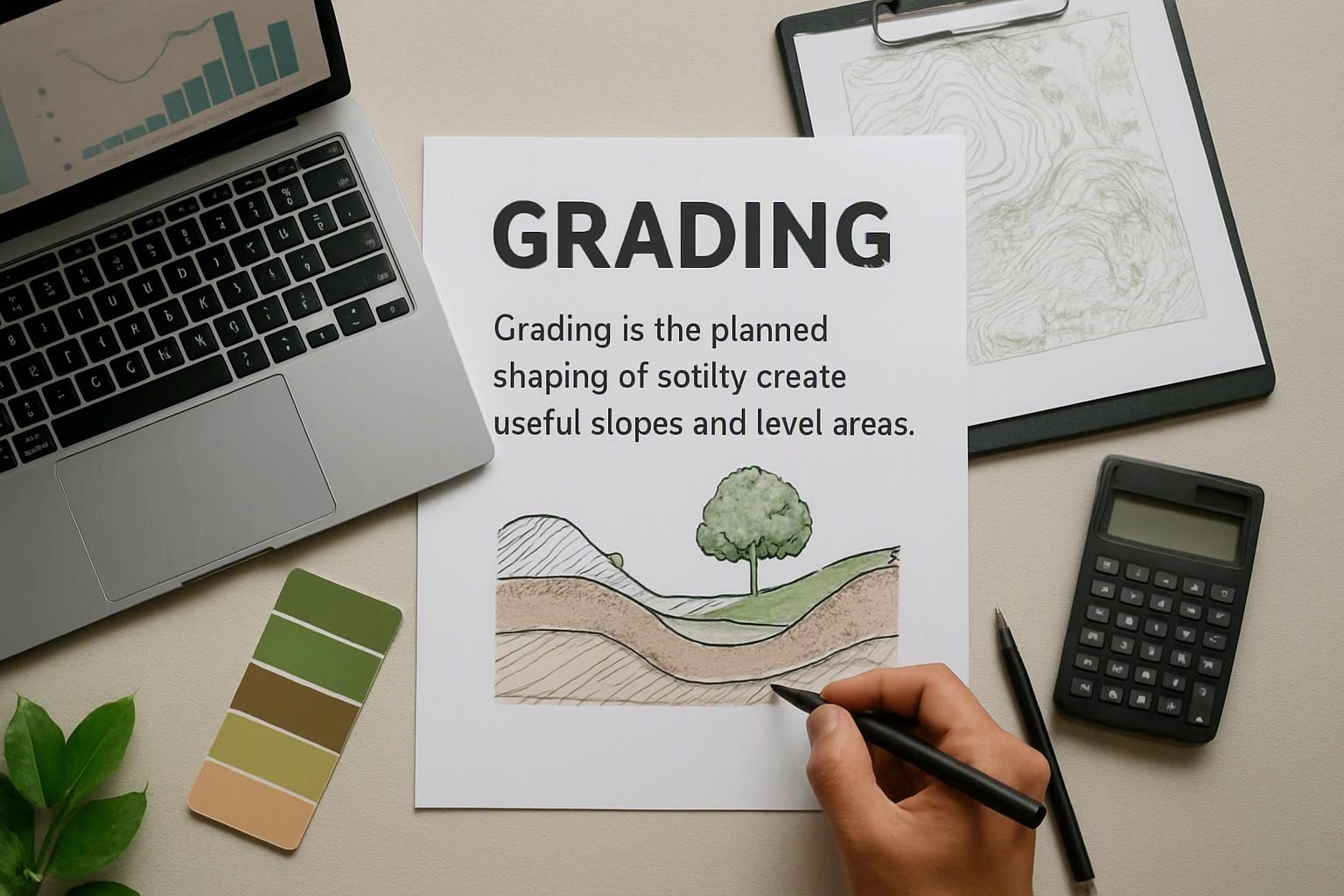
Grading changes the soil surface to form planned slopes, shallow dips, and level spaces. A grading plan shows how the ground should meet a house, retaining wall, patio, path, or planting bed. The plan also considers where rainwater will travel.
Related glossary terms: Berm, Bioswale, Catch Basin.
Workers read the plan and move soil from higher areas to lower areas when needed. They check the finished surface against nearby features, so abrupt drops and water traps don't develop. Drainage features, such as a swale or catch basin, may work with the graded surface to guide runoff.

Expert Note
When we plan grading, we study existing slopes, drainage paths, and the location of proposed landscape features. We check transitions at doors, paths, patios, and planting areas so the finished design works as one connected surface.
Grading in Practice: A Real-World Example
A landscape designer may shape a sloped yard so rainwater moves away from the house and toward a planted drainage area. The plan can also create a level space for a patio while keeping the surrounding ground connected.
Related Services
Related Terms
Berm
A berm is a raised, shaped mound of soil used to guide water, create visual separation…
Bioswale
Bioswale is a shallow, planted drainage channel that slows stormwater and helps water soak into the…
Catch Basin
A catch basin is a landscape drainage box with a grated cover, a sump, and an…
Erosion Control
Erosion Control is the practice of keeping soil in place and limiting its movement by rain…
LandscaperIssaquahwa.com
Have Questions About Grading?
Contact LandscaperIssaquahwa.com for practical guidance on Grading and related landscape architect company work in Issaquah.