
What Is Erosion Control?
Erosion Control is the practice of keeping soil in place and limiting its movement by rain, runoff, wind, or construction activity. The work may include shaping grades, slowing water, covering bare soil, and guiding runoff toward stable drainage areas. Proper control protects soil, plants, structures, and nearby waterways.
Quick Facts About Erosion Control
Category
Soil and runoff management
Used for
Protecting exposed soil and drainage areas
Common confusion
It does not replace every drainage repair
Also called
Soil erosion control, Erosion and sediment control
Often discussed with
Drainage Solutions
Key Takeaways About Erosion Control
- Erosion Control manages soil movement at its source.
- Surface cover helps rainwater flow without carrying loose soil.
- Erosion Control is not the same as drainage repair.
How Erosion Control Works
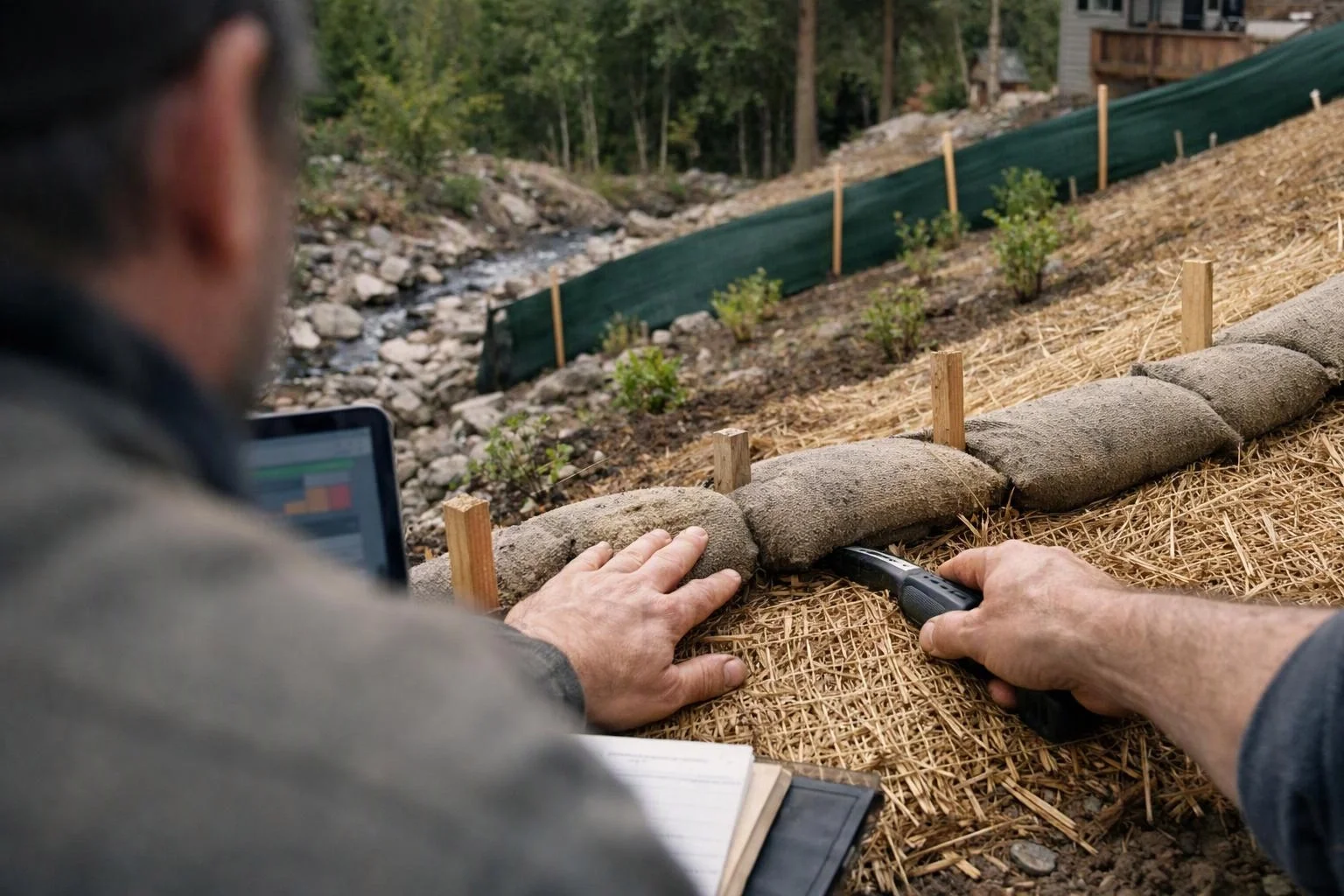
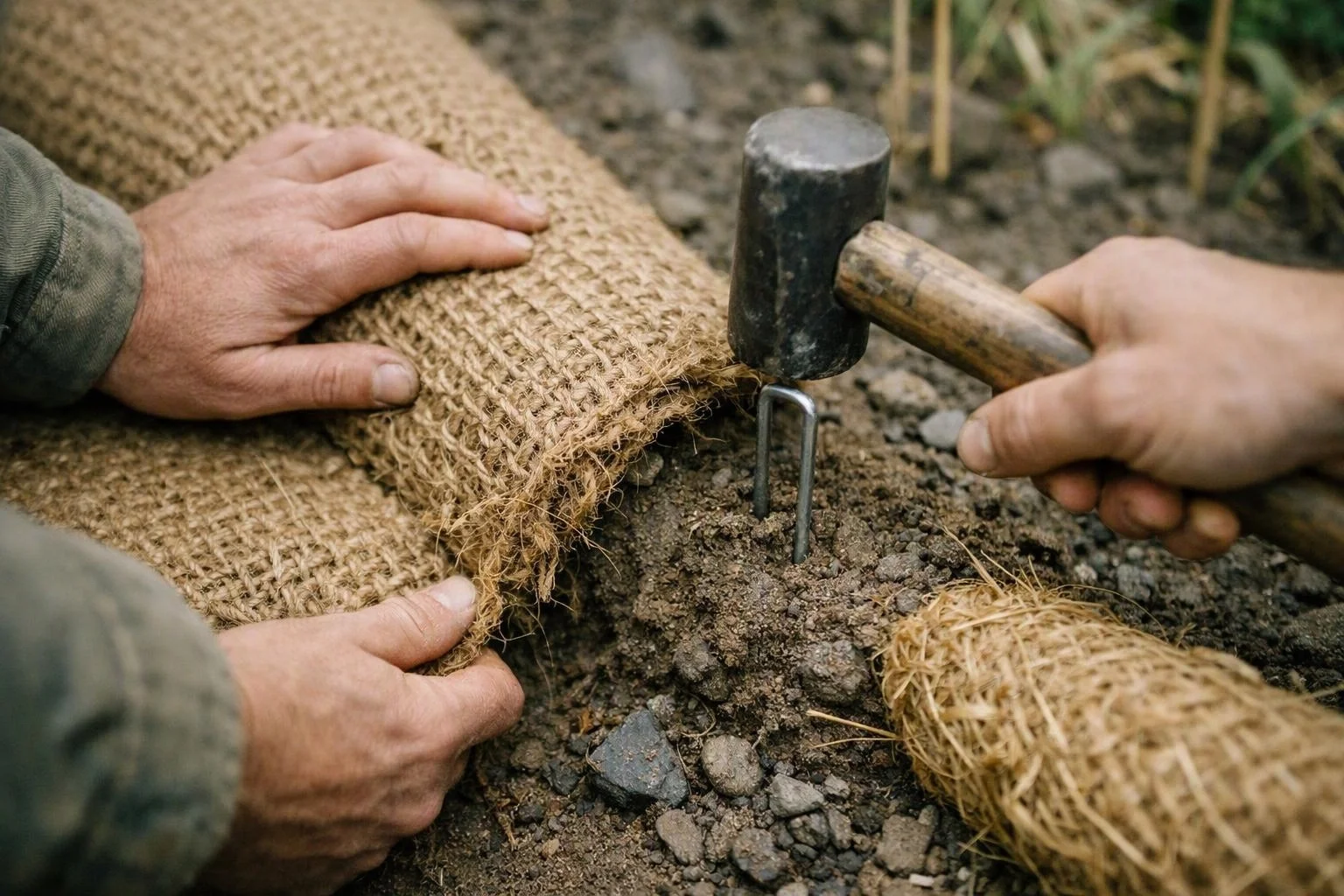
Erosion Control works by reducing the force of flowing water and shielding loose soil from rain. Crews may adjust a slope, add mulch, install erosion blankets, or place barriers that slow runoff. Plants also help because their roots hold soil together.
Related glossary terms: Grading, Geotextile Fabric, Mulch.
Good control follows the path water already takes across the site. A silt fence can catch soil near disturbed ground, while a swale can guide water through a stable channel. The right method depends on soil type, slope, drainage patterns, and how much ground is exposed. Inspection checks whether soil is still moving and whether water is bypassing the planned controls.
Expert Note
When we plan Drainage Solutions, we inspect slopes, bare soil, and runoff paths before choosing controls. We match surface protection and water guidance to site conditions, then check whether runoff stays on a stable route after installation.
Erosion Control in Practice: A Real-World Example
A sloped Issaquah yard has bare soil where runoff reaches a lower planting bed. Erosion Control may combine surface mulch, a shaped swale, and deep-rooted planting to slow water and keep soil in place.
Related Services
Related Terms
Grading
Grading is the planned shaping of soil to create useful slopes and level areas on a…
Geotextile Fabric
Geotextile Fabric is a synthetic textile placed in soil to separate, filter, reinforce, or protect ground…
Mulch
Mulch is a protective layer placed over soil around plants. It may contain wood chips, bark…
Swale
A swale is a shallow, sloped channel that guides and slows stormwater across a landscape. It…
LandscaperIssaquahwa.com
Have Questions About Erosion Control?
Contact LandscaperIssaquahwa.com for practical guidance on Erosion Control and related landscape architect company work in Issaquah.