
What Is Mulch?
Mulch is a protective layer placed over soil around plants. It may contain wood chips, bark, leaves, compost, or other organic material. Mulch helps slow moisture loss, reduce weed growth, limit soil splash, and moderate soil temperature. As organic mulch breaks down, it also adds small amounts of organic matter.
Quick Facts About Mulch
Category
Garden bed material
Used for
Moisture control and weed reduction
Common confusion
Mulch is not soil or landscape fabric
Also called
Landscape mulch, Ground cover
Often discussed with
Garden Design, Planting Design
Key Takeaways About Mulch
- Mulch is loose material, not a permanent ground surface.
- Keep mulch slightly away from plant stems and trunks.
- Mulch is not the same as landscape fabric.
How Mulch Works
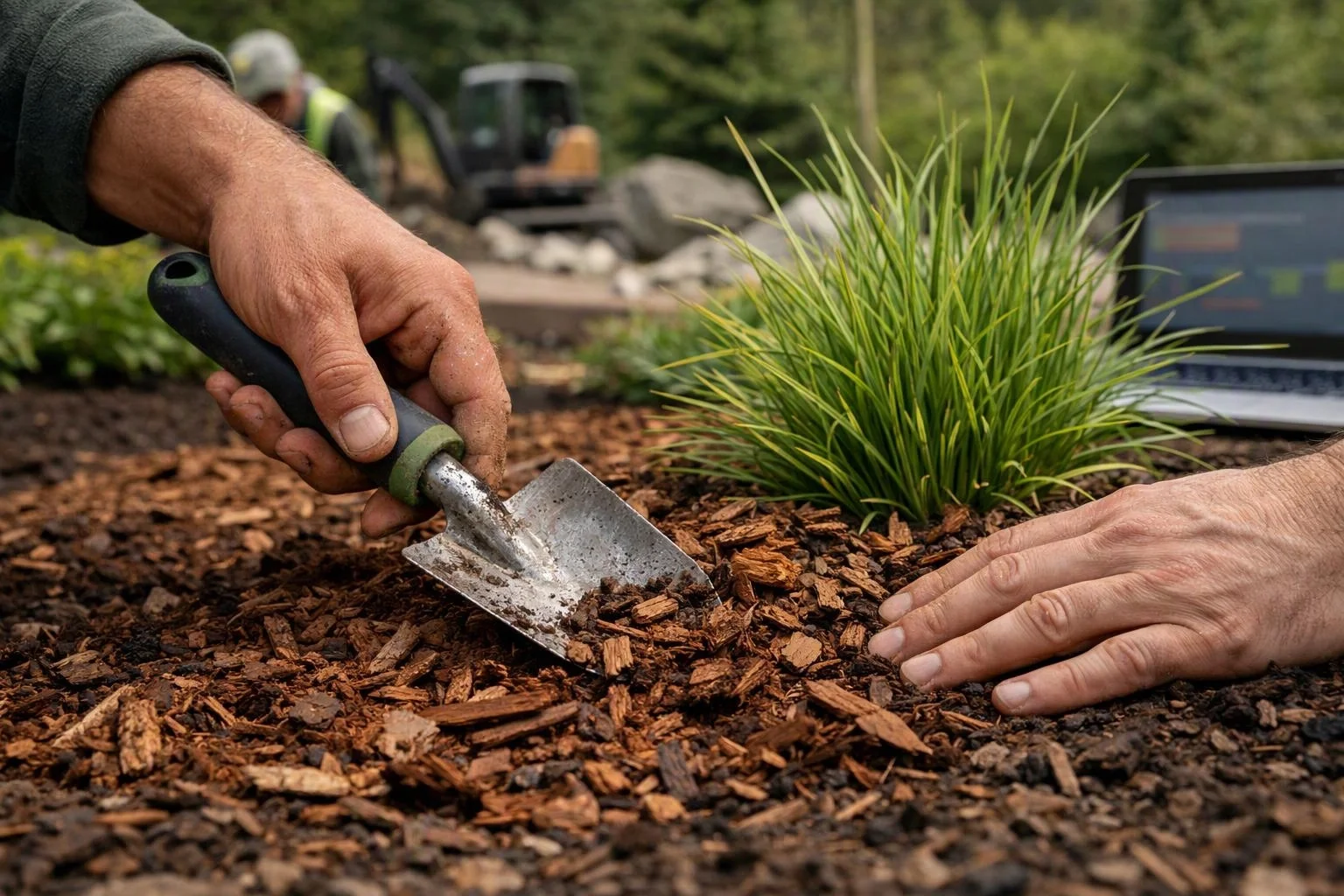
Mulch covers exposed soil and changes how water, heat, and weeds affect a planting bed. The layer slows evaporation and softens the impact of rain on bare soil. It also gives weed seeds less open space for growth.
Related glossary terms: Soil Amendment, Landscape Edging, Landscape Fabric.
Organic mulch slowly breaks down, while stone mulch remains in place but does not add organic matter. The right material depends on the planting style, soil condition, drainage, and desired appearance. Soil moisture stays more stable under mulch, but thick or poorly placed layers can hold too much moisture near stems.
Gardeners often refresh mulch as it settles or decomposes. Mulch should cover the soil evenly without touching trunks, crowns, or plant stems. Landscape fabric may sit beneath some stone beds, but it does not replace the surface layer.
Expert Note
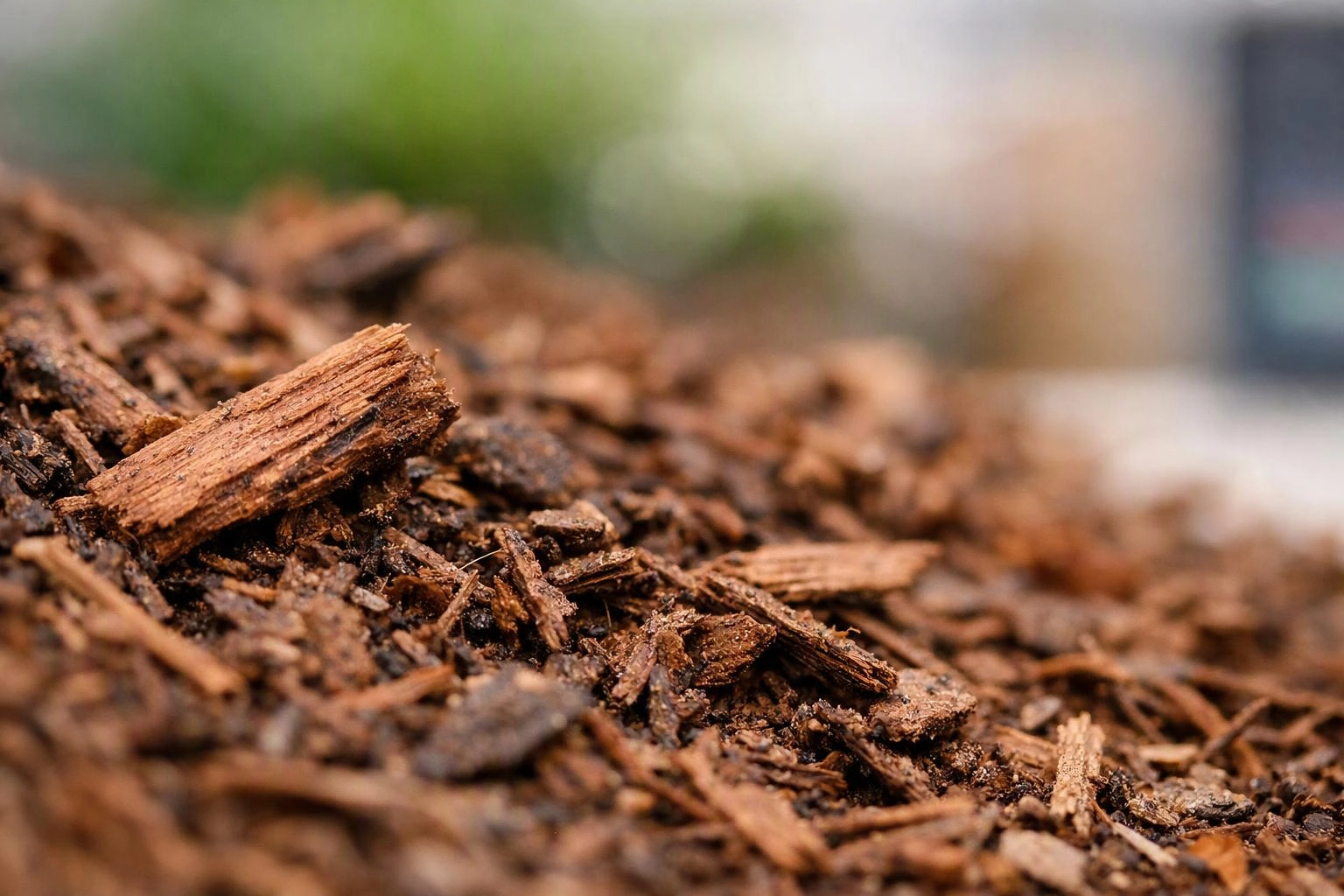
When we design garden beds, we match mulch type and color to the plants, soil, and overall layout. We also check drainage and keep the material clear of stems, trunks, paths, and hardscape edges so the finished bed stays healthy and tidy.
Mulch in Practice: A Real-World Example
For a Garden Design project, a planting bed with shrubs and perennials may receive a layer of bark mulch after soil preparation. The mulch helps protect exposed soil and gives the bed a clean, finished appearance.
Related Services
Related Terms
Soil Amendment
A soil amendment is a material mixed into existing soil to improve its structure, drainage, moisture…
Landscape Edging
Landscape Edging is a garden border that separates planting areas from lawns, paths, or other surfaces…
Landscape Fabric
Landscape Fabric is a permeable ground cover that blocks sunlight and slows weed growth while allowing…
Weed Barrier
Weed Barrier is a material placed over prepared soil to block light and slow weed growth…
LandscaperIssaquahwa.com
Have Questions About Mulch?
Contact LandscaperIssaquahwa.com for practical guidance on Mulch and related landscape architect company work in Issaquah.