
What Is Landscape Edging?
Landscape Edging is a garden border that separates planting areas from lawns, paths, or other surfaces. It may use metal, stone, brick, plastic, wood, or living plants. Edging helps keep soil and mulch in place, defines bed shapes, and creates a clear line between different parts of a landscape.
Quick Facts About Landscape Edging
Category
Garden border
Used for
Separating beds from lawns and paths
Common confusion
Not a retaining wall
Also called
Garden edging, Bed edging
Often discussed with
Garden Design, Planting Design
Key Takeaways About Landscape Edging
- Edging creates a visible boundary between landscape areas.
- A stable border helps contain soil and mulch.
- Edging is not the same as a retaining wall.
How Landscape Edging Works
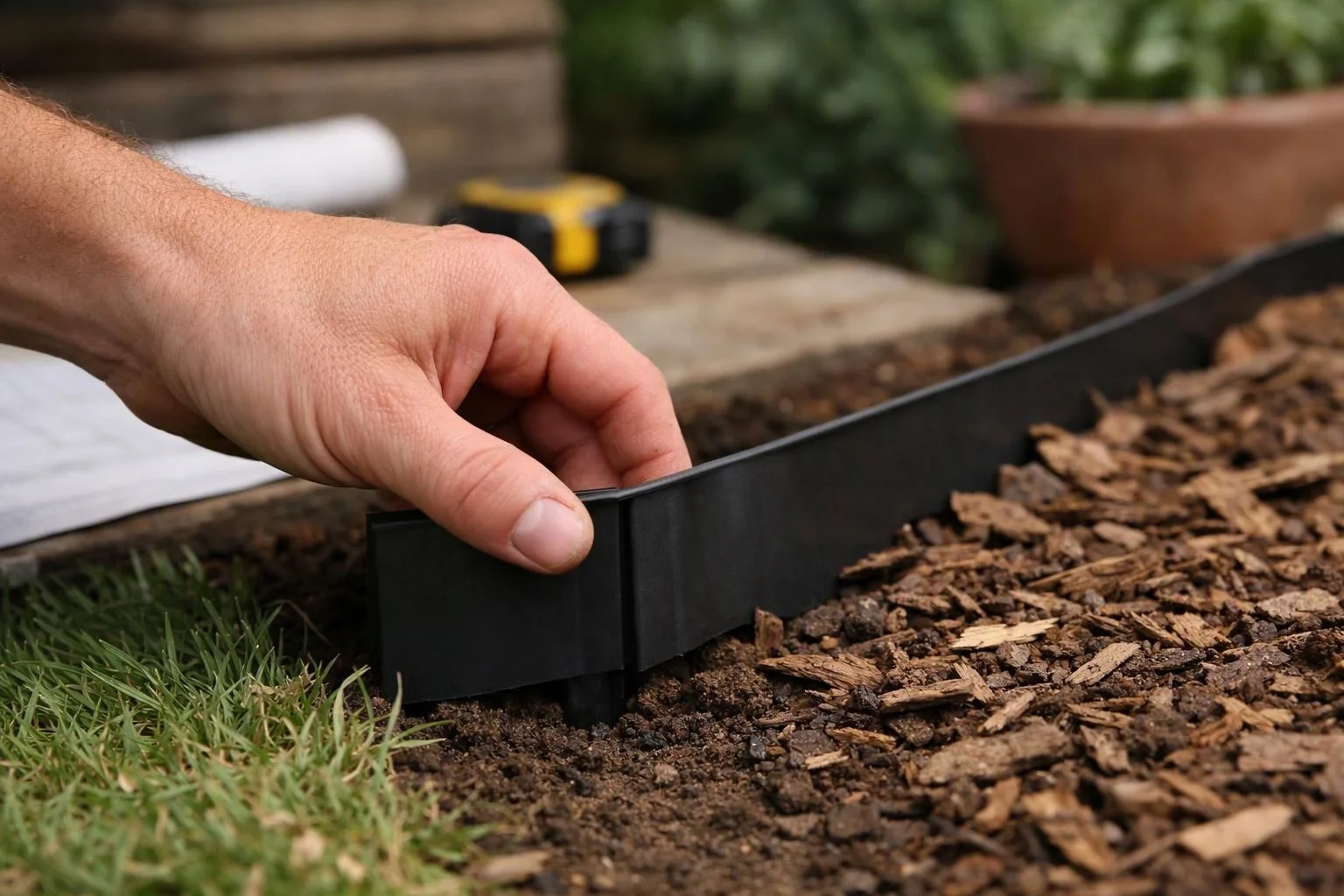
Landscape Edging works by placing a continuous border along the edge of a planting bed. The border may sit level with the ground or rise slightly above it. Its height and shape depend on the bed design, nearby surfaces, and the material used.
Related glossary terms: Hardscape, Mulch, Soil Amendment.
Installers prepare a narrow trench or base, set the edging in place, and secure or anchor it as needed. The finished line should follow the planned curve without creating sharp changes that make mowing difficult. Mulch can then fill the bed up to the border, while lawn or paving stays outside it.
Edging marks a design boundary, but it doesn't hold back large amounts of soil. A retaining wall handles soil pressure and changes in grade. Edging mainly defines space and limits the movement of loose bed materials.
Expert Note
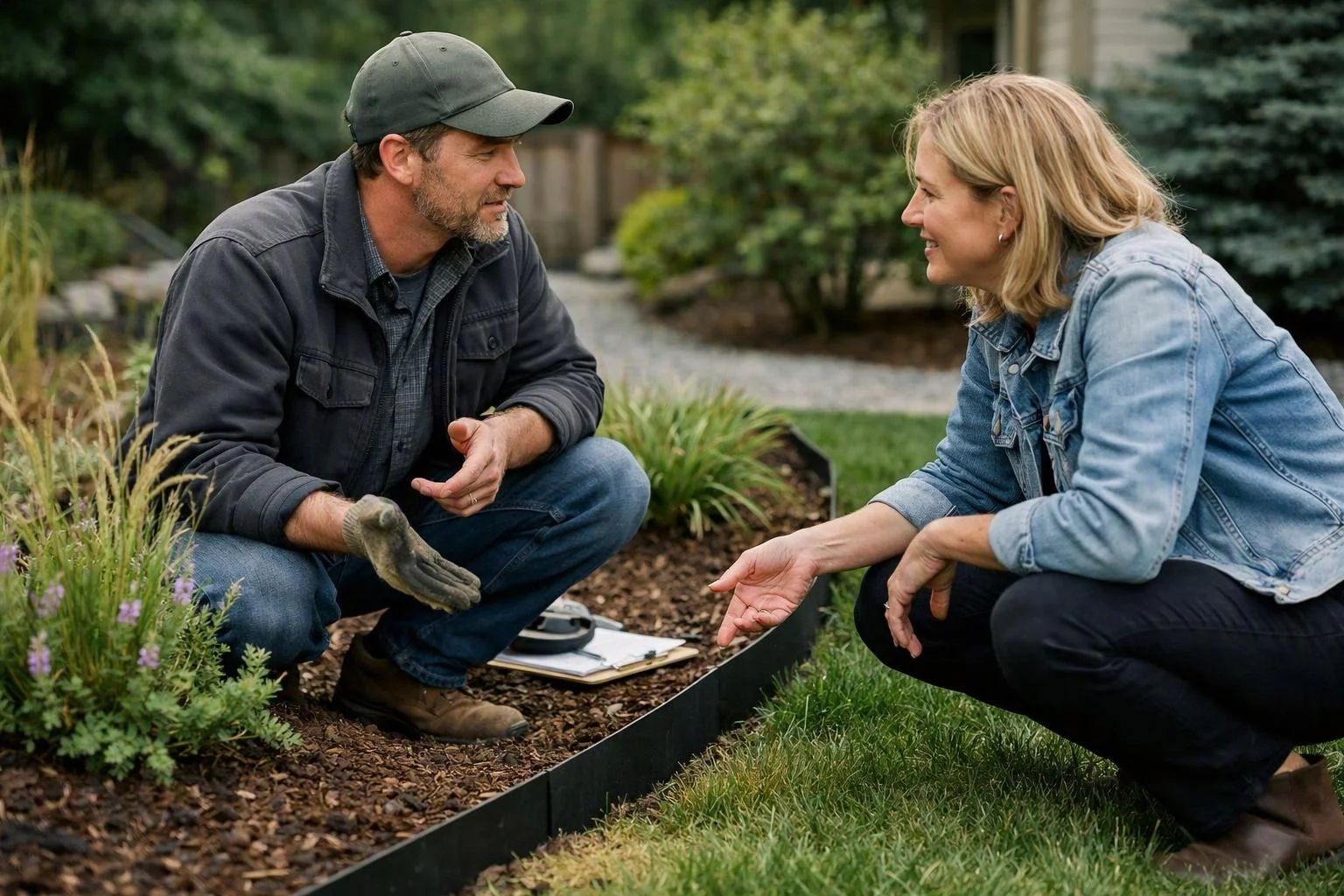
When we plan edging, we match its line to the bed shape, nearby paving, and mowing path. We also check that the border won't block drainage or trap water against a walk. In Garden Design, we coordinate the edging with plant spacing and the final mulch level.
Landscape Edging in Practice: A Real-World Example
A Garden Design may place a curved planting bed beside a lawn and walkway. Landscape edging can follow the curve, keep mulch inside the bed, and give the planting area a clean boundary.
Related Services
Related Terms
Hardscape
Hardscape is the built part of a landscape, including patios, walkways, retaining walls, steps, decks, and…
Mulch
Mulch is a protective layer placed over soil around plants. It may contain wood chips, bark…
Soil Amendment
A soil amendment is a material mixed into existing soil to improve its structure, drainage, moisture…
Landscape Fabric
Landscape Fabric is a permeable ground cover that blocks sunlight and slows weed growth while allowing…
LandscaperIssaquahwa.com
Have Questions About Landscape Edging?
Contact LandscaperIssaquahwa.com for practical guidance on Landscape Edging and related landscape architect company work in Issaquah.