Planning Landscape Lighting for Paths, Patios, and Outdoor Rooms
Landscape lighting design for outdoor spaces combines path safety, patio comfort, and focused task lighting for outdoor rooms. At LandscaperIssaquahwa.com, we plan fixture locations, wiring needs, and lighting layers around how each space is used.
Written by Adam Gorski · 29 years of local experience
Request an Estimate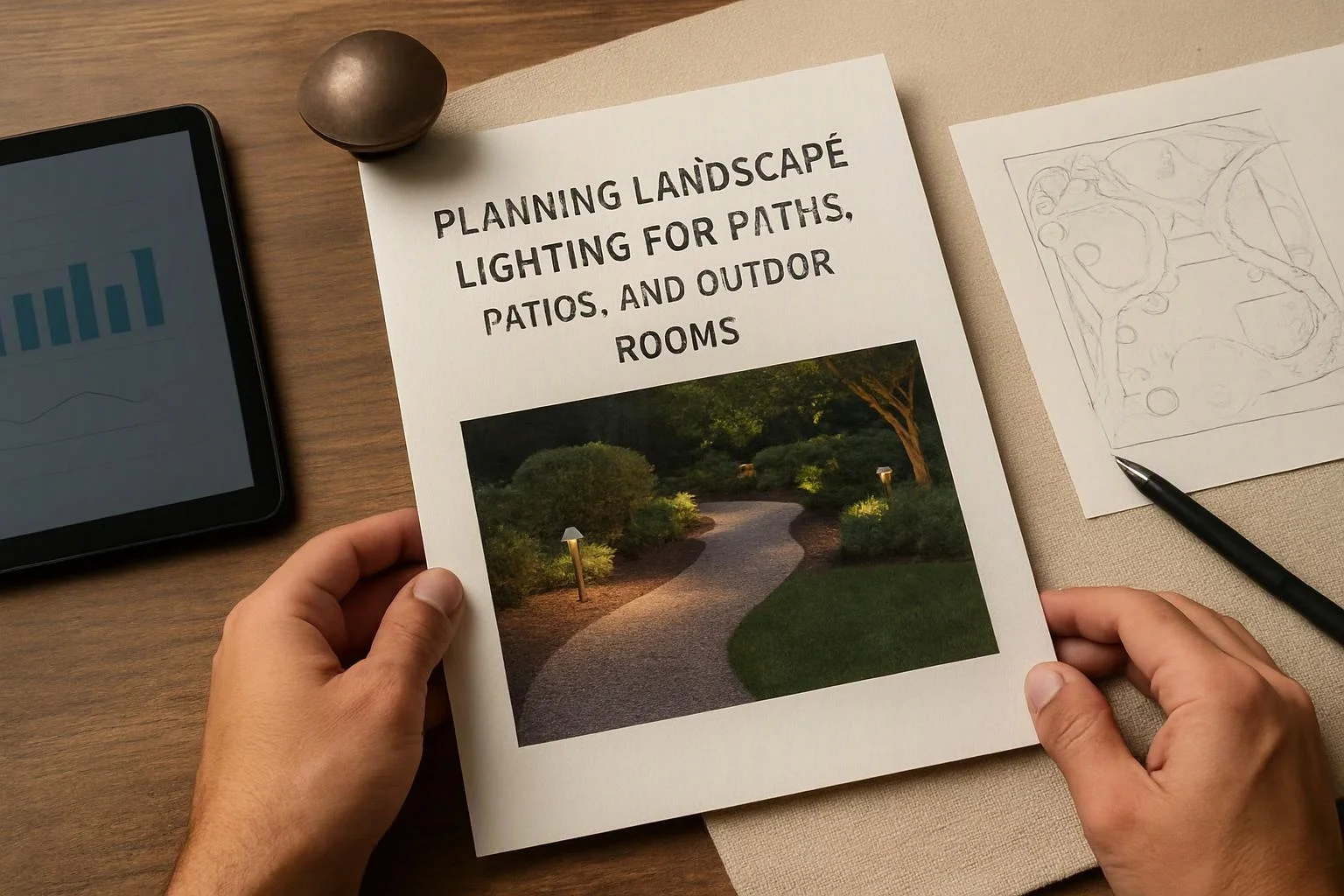
Landscape lighting design supports paths, patios, and outdoor rooms by connecting safety with comfort. Our team plans each light around circulation, gathering areas, and the way your backyard design works after dark.
Adam Gorski provides the expert guidance for this page. We use the finished landscape plan to guide fixture placement, wiring routes, and visual balance.
Start With How Your Outdoor Space Works
Backyard design should start with how people move, gather, cook, and enter the property. Landscape lighting then follows those uses instead of filling every area with equal brightness.
We map circulation between the home, patio, paver walkway, garden beds, and outdoor rooms. That plan helps us place light where it supports daily use without making the yard feel harsh.
Lighting also needs to fit the larger landscape design. Our deck builder team can coordinate deck areas with nearby paths, patios, and outdoor living zones.
Where Landscape Lighting Adds the Most Value
Landscape lighting helps where people walk, gather, cook, enter, and move between outdoor areas.
When Paths, Patios, and Lighting Need One Plan
Landscape lighting and hardscape work need one plan when construction may change path edges, paving, grades, or wiring routes.
We recommend coordinating both services in these situations:
How Hardscape and Landscape Lighting Work Together
Hardscape and landscape lighting work together through coordinated layout, early wiring decisions, and fixture placement after key surfaces are set.
Our Landscape Lighting Designer reviews the hardscape plan before our crew begins landscape lighting installation. This approach helps protect finished pavers and reduces changes caused by blocked wiring routes.
Plan Lighting Layers for Paths and Gathering Areas
Layered lighting makes outdoor gathering areas useful without making every fixture equally bright. We combine ambient lighting for general comfort with path lighting for movement.
Accent lighting can draw attention to planting beds, walls, trees, or architectural details. Step lighting supports grade changes, while careful beam direction helps control glare.
Our team also checks light spill across property lines, windows, and neighboring spaces. Good glare control keeps the lighting comfortable from both the patio and the house.
Design Outdoor Kitchen Lighting Around Each Task
Outdoor kitchen lighting should place focused task light at work surfaces while keeping dining and circulation areas comfortable.
We plan task lighting for countertops, the grill, and food preparation areas. Each work surface needs clear light without shining directly into a cook’s eyes.
The dining area usually needs softer light than the cooking zone. Switching zones let you control work areas, dining spaces, and nearby paths separately.
Choose Fixtures and Controls for the Whole Property
Fixture selection should match the purpose, surface, plant growth, and viewing angle of each area. Our team also plans the transformer and lighting controls as part of the complete system.
| Fixture or control | Common planning role |
|---|---|
| Path lights | Guide walkways and define circulation. |
| Spotlights | Direct focused light toward trees, walls, or features. |
| Wash lights | Spread softer light across walls and broad surfaces. |
| Step lights | Make steps and grade changes easier to read. |
| Wall lights | Add light near entries, walls, and outdoor rooms. |
| Transformer | Supports the low-voltage lighting system. |
| Timers and lighting controls | Manage switching zones and daily operation. |
What We Check Before We Plan the Installation
Our site assessment connects the property layout with safe fixture locations and practical wiring routes.
How Project Details Shape the Quote
The quote depends on the lighting layout, fixture selection, wiring access, hardscape conditions, and control needs.
Fixture count and wiring distance affect the material plan. Trenching and hardscape access affect the work needed to place wiring safely.
Control zones and existing electrical infrastructure also shape the design. We explain what the landscape lighting quote includes and prepare it from the site conditions we review.
Contact our team through our contact page to request an exact quote for your property.
Our installation work follows applicable electrical requirements and inspection criteria. We handle the regulated electrical work, and homeowners should not attempt wiring or connections that require licensed service.
Plan a Lighting Layout That Fits the Finished Space
Lighting design works best when the layout is reviewed against the finished site before installation is complete.
Connect Your Outdoor Lighting Plan to the Full Landscape
Landscape design gives outdoor lighting its structure, purpose, and visual balance. Lighting should support outdoor living across the patio, walkway, deck, and outdoor kitchen.
We coordinate patio design with walkway design so movement feels natural. We also review deck design and planting areas so the lighting works with the finished view.
A complete outdoor lighting design can follow the ideas in “Landscape Design Principles: How to Create a Cohesive Outdoor Space” when you want each area to feel connected.
Request a project review from our team when you’re ready to plan the lighting, hardscape, and outdoor living areas together.
Questions About Planning Outdoor Lighting
Can landscape lighting be added after a patio is installed?
Yes, landscape lighting can be added after patio installation when our team can reach suitable wiring routes. Existing hardscape may limit access, so we review edges, joints, drainage, and electrical connections before planning the work.
Where should lights be placed along a walkway?
Walkway lights should mark path edges, turns, steps, and grade changes without shining directly into the eyes. Our team places fixtures around the way people approach and leave the walkway.
How do you reduce glare from outdoor landscape lights?
We reduce glare by controlling beam direction, shielding bright sources, and placing fixtures away from direct sight lines. Our team also checks the lighting during nighttime adjustment.
What lighting works best around an outdoor kitchen?
Focused task lighting works best at countertops, the grill, and food preparation areas. Softer light suits the dining area, while separate switching zones help keep cooking and dining comfortable.
Related Resources
Professional Landscape Lighting vs. Solar Lights: Which Is Right for Your Yard?
Compared ToDeck or Patio: Which Outdoor Living Space Should You Build?
Compared ToPaver Patio vs. Concrete Patio: Comparing Cost Factors, Repairs, and Drainage
When You Need ItWhy Paver Patios Sink, Shift, or Become Uneven