Paver Patio vs. Concrete Patio: Comparing Cost Factors, Repairs, and Drainage in Issaquah, Washington
Paver patios offer easier spot repairs and flexible drainage, while concrete patios provide a continuous surface with different cracking and runoff concerns. LandscaperIssaquahwa.com compares the site, base, access, finish, drainage, and repair needs before preparing a quote. Our team provides licensed landscaping work and upfront pricing based on the project scope.
Written by Adam Gorski · 29 years of local experience
Request an EstimatePaver Patio vs. Concrete Patio at a Glance
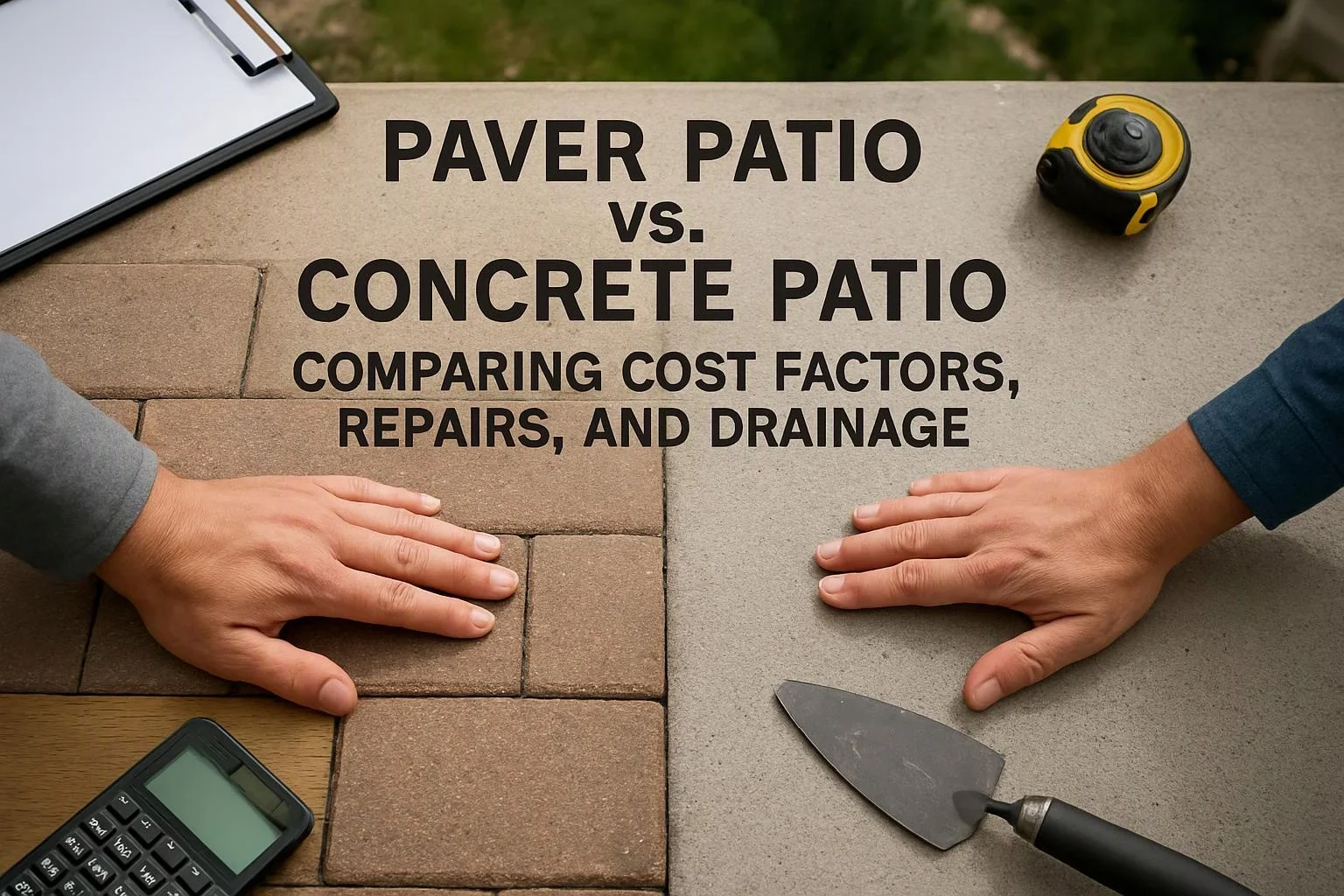
Paver patios suit projects that value replaceable units and joint drainage, while concrete patios suit continuous-surface designs and simpler layouts. The right choice depends on the ground, access, water flow, and how you plan to use the patio.
Our Paver Patio Installation process accounts for these details before we recommend materials.
- Paver patio: Best for flexible repairs, pattern choices, and grade changes.
- Concrete patio: Best for an open layout with a continuous surface.
| Option / System | Best For | Cost and Installation Timeline | Maintenance and Trade-Offs |
|---|---|---|---|
| Paver patio | Patterns, flexible repairs, and changing grades | Cost changes with excavation, the patio base, access, drainage, paver material, and layout. Installation timing changes with preparation and site complexity. | Individual units can be replaced. Joints may need care, and poor base work can cause settling. |
| Concrete patio | Open layouts and a continuous surface | Cost changes with excavation, reinforcement, slab design, finish, access, grading, and drainage. Installation timing changes with forms, placement, and site conditions. | The slab needs joint planning and surface care. Cracks, movement, or spalling can require visible repairs. |
What Changes the Cost of a Paver or Concrete Patio?
The cost of either patio depends on site preparation, access, drainage work, materials, design complexity, and finish choices. We review the full work area before preparing a patio quote.
Patio size and shape affect material use and layout work. Site access affects excavation, material handling, and cleanup. Demolition can add preparation work when an existing surface must be removed.
Both systems need a stable patio base and correct grading. A paver patio also needs paver units, edge restraints, and joint material. A concrete patio needs forms, a concrete mix, reinforcement, control joints, and a selected surface finish.
Drainage can change the scope when runoff reaches a building, retaining wall, or walking area. Our team explains the preparation, material selection, and drainage work included in our upfront pricing.
What a Paver Patio Quote Should Include
A paver patio quote should identify the pavers, excavation, compacted base, bedding layer, edge restraint, joint material, grading, drainage details, and site cleanup. These items show how the patio will be built, not just which surface will be visible.
We also review paver selection and the planned pattern. The written scope should explain how the crew will handle low areas, transitions, access limits, and any existing surface removal.
What a Concrete Patio Quote Should Include
A concrete patio quote should identify subgrade preparation, reinforcement, concrete mix, forms, slab thickness, control joints, surface finish, grading, drainage details, and site cleanup. These details help you compare a complete concrete installation scope.
We explain whether the design uses a broom finish or another decorative finish. The quote should also show how the slab will meet nearby paths, walls, doors, and drainage features.
Paver Patio Advantages and Best-Fit Uses
Paver patios work well when the design needs flexible repairs, pattern choices, or better accommodation of minor ground movement. Interlocking pavers can also create a surface with permeable joints that helps manage some water flow.
Best for: A paver patio suits homeowners who value repair access, pattern choices, and adaptable construction.
Concrete Patio Advantages and Best-Fit Uses
Concrete patios work well when the project needs a continuous surface and a straightforward open layout. A concrete slab can provide a clean base for furniture, dining, and broad patio areas.
Best for: A concrete patio suits homeowners who prefer a continuous surface and a simple open design.
How Paver and Concrete Patio Repairs Differ
Paver repairs usually target individual units or the supporting base, while concrete repairs address cracks, surface damage, or slab movement. The repair path depends on whether the visible problem begins at the surface or below it.
Sunken pavers may point to base failure, poor compaction, or water movement. Joint erosion can also allow movement and weeds. Our crew can reset affected areas and match replacement materials when suitable products are available.
Concrete repair may address cracking, surface spalling, or slab movement. Matching the existing surface finish can be difficult, so we review the repair area and the cause before recommending work.
Occasional freezing conditions can stress both systems. A sound base, planned drainage, suitable joints, and timely repair planning help limit movement concerns.
How Drainage Changes the Patio Decision
Drainage design matters for both patio types because the finished surface must move water away from structures and usable areas. We review surface slope, runoff, soil moisture, and nearby drainage features before choosing a patio system.
Permeable pavers may help manage water through their joints when the base and soil support that approach. Concrete runoff needs a planned slope and may need a drainage channel or catch basin.
Downspout discharge can change the patio layout and the runoff path. A retaining wall can also affect grading, soil pressure, and water movement around the patio.
Drainage Considerations for Issaquah Properties
Seasonally wet conditions make runoff and soil moisture important parts of patio planning in Issaquah, Washington. Our team checks where water collects and where the finished surface can safely direct it.
Sloped or uneven properties can change grading, access, stability, and runoff planning. Ground movement and changing level transitions can affect both pavers and concrete, so the patio base and drainage details need careful coordination.
How We Compare the Site Before Recommending a Patio
Our site review connects the patio choice to the ground, water movement, access, and intended use. We use the findings to shape the material selection and written patio quote.
How to Compare Paver and Concrete Patio Quotes
Compare patio quotes by matching the written scope, preparation work, drainage plan, materials, finish, cleanup, and exclusions. A lower written total may reflect fewer preparation tasks or omitted drainage work.
Check whether each quote names excavation, base preparation, grading, and site access needs. Confirm the paver type or concrete mix, edge details or control joints, surface finish, repair allowances, and final cleanup.
Our quote explains the planned work and its exclusions so you can review the scope clearly. We can discuss the project through our project quote request process.
Plan Your Patio Installation in Issaquah, Washington
LandscaperIssaquahwa.com reviews your site and prepares upfront pricing based on the patio scope, materials, drainage, and preparation work. Our licensed landscaping team handles paver patio installation, concrete patio installation, and related patio installation planning.
We look at access, grading, soil moisture, runoff, finish details, and repair needs before recommending a surface. Contact our team to request a project quote for your outdoor hardscape.
Author: Adam Gorski
Related Resources
Why Paver Patios Sink, Shift, or Become Uneven
What Goes With ItLandscape Design Principles: How to Create a Cohesive Outdoor Space
What Goes With ItPlanning a Backyard for Dining, Shade, and Gathering
Brand vs BrandConcrete Patio Installation Companies Worth Comparing in Issaquah (2026)