
What Are Permeable Pavers?
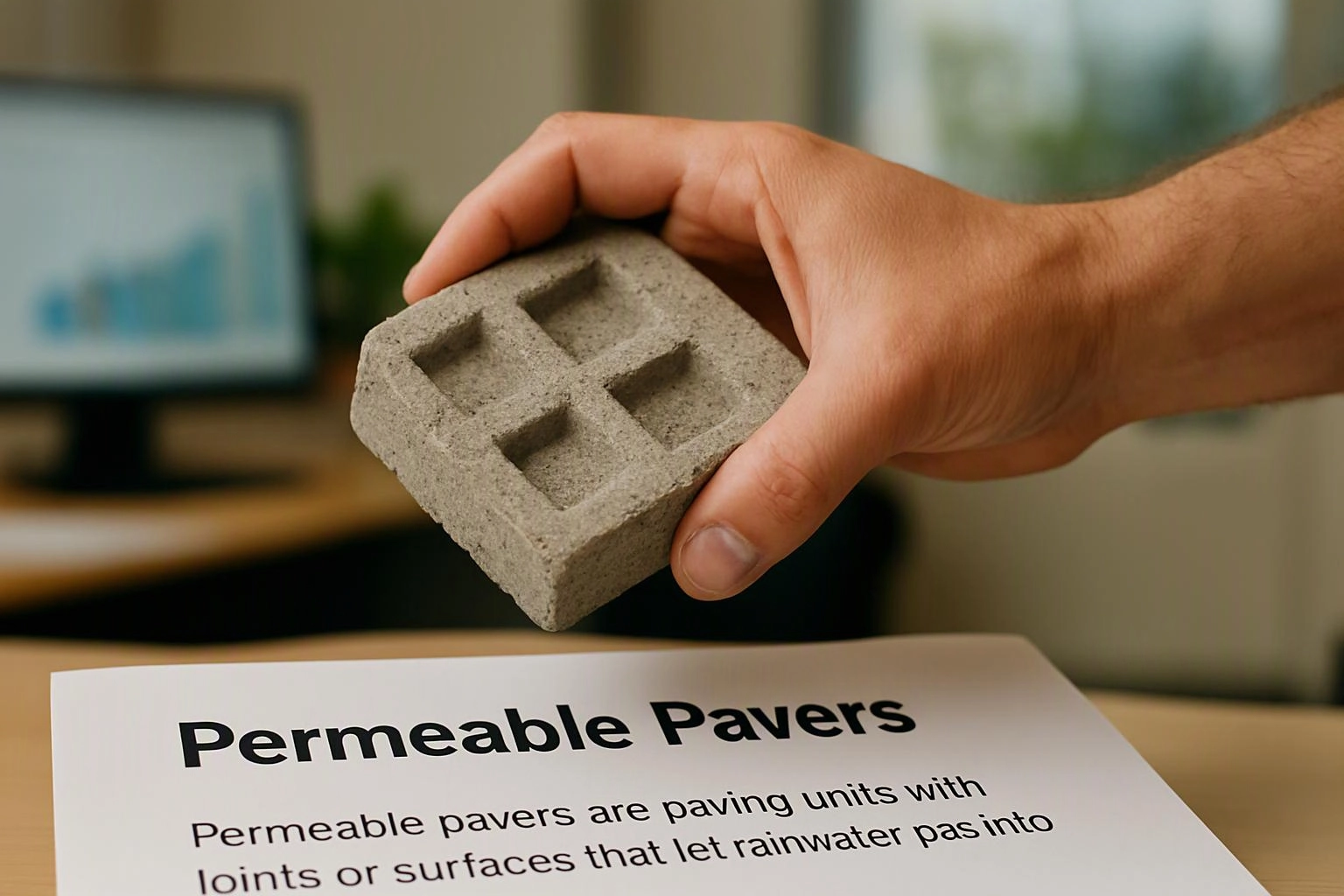
Permeable Pavers are paving units with joints or surfaces that let rainwater pass into a stone base below. The base stores and filters water before it moves into the soil. This design helps reduce surface runoff on patios, walkways, and driveways when the soil and drainage plan support infiltration.
Quick Facts About Permeable Pavers
Category
Paving system
Used for
Patios, walkways, and driveways
Common confusion
Ordinary pavers with sand-filled joints
Also called
Permeable concrete pavers, Pervious pavers
Often discussed with
Paver Patio Installation, Paver Walkway Installation
Key Takeaways About Permeable Pavers
- Open joints allow water to pass through the paved surface.
- A clean, deep base supports drainage below the pavers.
- Permeable pavers are not the same as ordinary pavers with sealed joints.
How Permeable Pavers Works
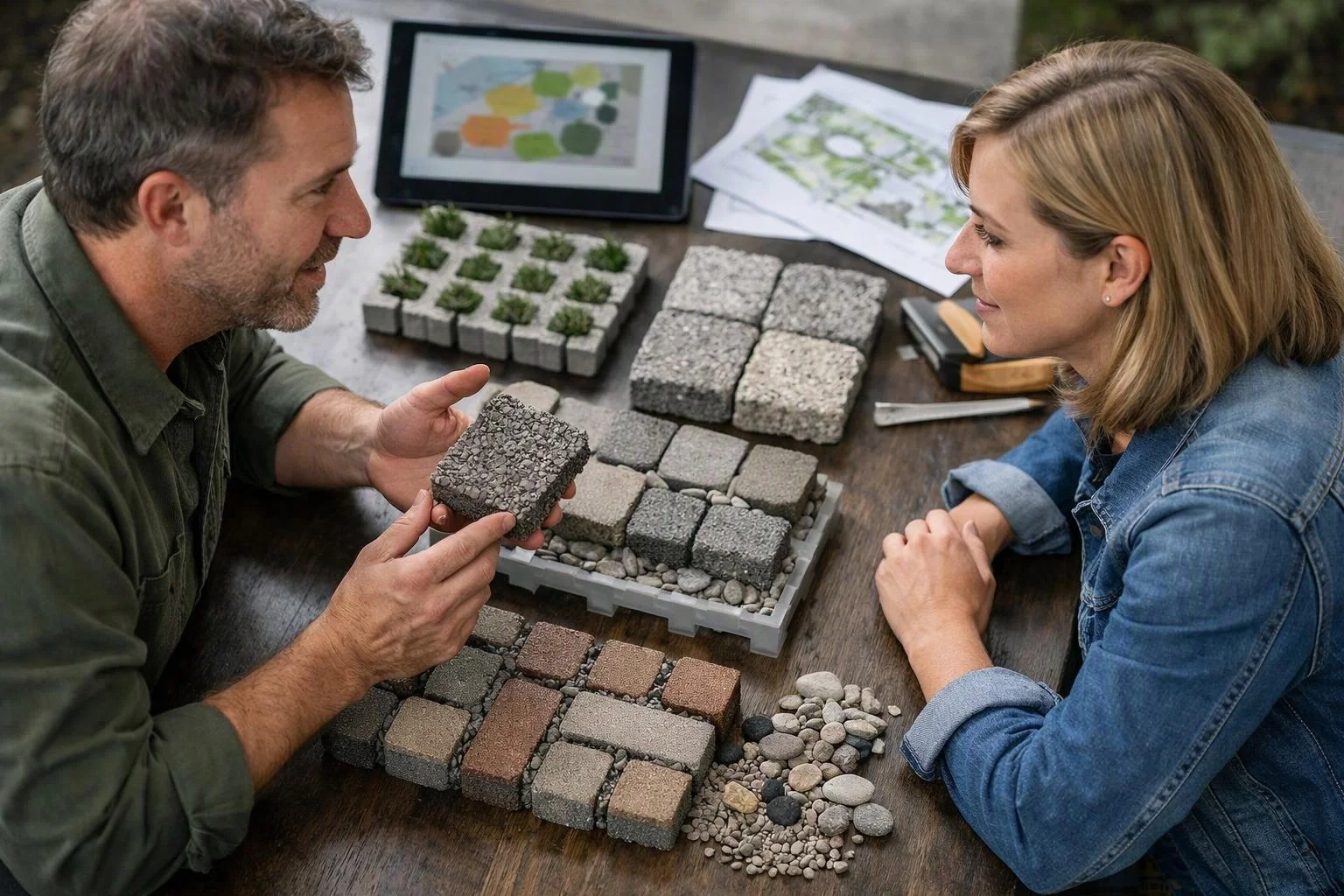
Permeable Pavers work through open joints or a porous surface. Rainwater moves downward into layers of clean, crushed stone beneath the paved area. The stone holds water briefly and lets it soak into the soil.
Related glossary terms: Paver Base, Geotextile Fabric, Grading.
A permeable patio needs more than special pavers. The base must have the right stone, depth, and edge support for the site. Soil type, slope, and nearby drainage also affect how well water moves. A fabric layer may separate soil from the stone while allowing water to pass.
What the system includes
- Permeable paving units.
- Open-graded stone for the base.
- Joint material that leaves drainage paths.
- Edge restraints that keep the layout stable.
Expert Note
When we plan permeable pavers, we check the soil, slope, and expected water flow before choosing the base design. We also keep drainage paths clear and match the edge restraints to the patio layout. These checks help the paved surface drain as planned without sending water toward the home.
Permeable Pavers in Practice: A Real-World Example
A homeowner adds permeable pavers for a backyard patio beside a lawn. The patio base stores rainwater below the surface, while the planned slope directs excess water away from the house.
Related Terms
Paver Base
Paver Base is a compacted layer of crushed stone placed beneath patio, walkway, or driveway pavers…
Geotextile Fabric
Geotextile Fabric is a synthetic textile placed in soil to separate, filter, reinforce, or protect ground…
Grading
Grading is the planned shaping of soil to create useful slopes and level areas on a…
Underdrain
An underdrain is a buried drainage system that collects excess water below the soil surface and…
LandscaperIssaquahwa.com
Have Questions About Permeable Pavers?
Contact LandscaperIssaquahwa.com for practical guidance on Permeable Pavers and related landscape architect company work in Issaquah.