Skip to content

Rain Garden Installation in Renton, Washington

Mulch layer placement must protect plant crowns and keep water moving safely in Renton. We plan the soil, stone, and plants as one working system.

5 · 36 Reviews29 Years in BusinessUpfront, Transparent PricingServing 95 Communities

Quick Summary: rain garden installation in Renton, Washington

Rain Garden Installation in Renton is provided by LandscaperIssaquahwa.com for homeowners throughout King County and nearby Eastside communities. The work covers amended soil, river stone, native plants, and a design-to-build process led by landscape architecture experience.

  • What we do: LandscaperIssaquahwa.com provides Rain Garden Installation for homeowners in Renton, Washington.
  • What is included: We assess soil, slope, drainage, planting design, mulch placement, and stone details.
  • What you get: The finished rain garden has a planned planting area with suitable soil, stone, mulch, and native plants.

Which materials are used in rain garden installation in Renton, Washington?

A mulch layer, amended soil, river stone, and native plants form the main material group. Each material has a separate job. Soil supports roots and drainage, stone shapes the water path, and plants suit the planting area. Mulch helps protect soil and reduce weed pressure. The final selection follows the site review and the design scope.
Our Track Record

Years in Business
29
Average Rating
5
Customer Reviews
36

Rain garden installation and landscape planning in Renton

Rain garden installation creates a planted basin or bed that receives runoff and supports selected vegetation. The work suits homeowners who want a designed drainage feature that also fits the wider garden plan.

The main buyer decision is material fit. Amended soil must support roots and water movement, while river stone helps shape flow and protect exposed areas. Native plants add structure, but the site still needs the right grade and planting layout.

This page focuses on the material choices behind the installation. Our design-to-build process also considers how the rain garden connects with patios, walkways, retaining walls, lighting, and other outdoor improvements.

  • Check soil texture, slope, and existing drainage before choosing materials.
  • Confirm that the planting area has room for amended soil and root growth.
  • Choose river stone that fits the water path and surrounding hardscape.
  • Match native plants to the planned soil and moisture conditions.
  • Decide how the rain garden will connect with the wider garden design.
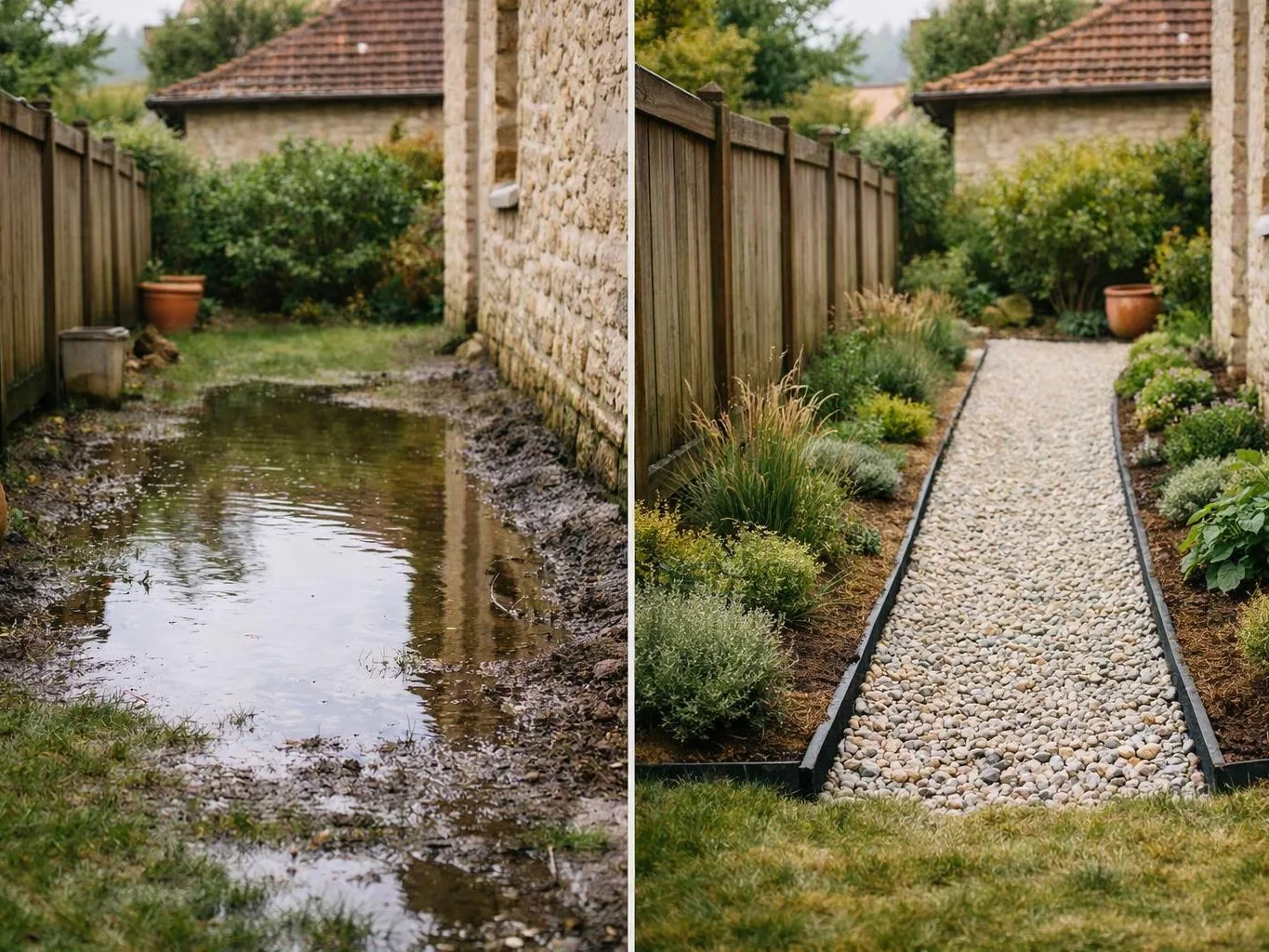
A backyard path changes from a muddy puddle on the left to a neat gravel walkway on the right

Service Overview

Rain garden installation is a planted landscape feature that collects and filters runoff through prepared soil.

  • It differs from a lawn planting or hardscape project because soil, drainage, stone, mulch, and plant selection must work together.
  • We provide rain garden installation in Renton as part of our King County and Eastside service coverage.

What to weigh before choosing a rain garden design

Match soil to the planting area

Rain garden materials must suit the site's soil and drainage. We review those conditions before the plan is built. This service is the wrong fit when the property needs a separate drainage repair or a different water-management solution first.

Keep stone in the right place

River stone works best where the design needs a defined flow path or surface protection. Its size, placement, and connection to nearby hardscape should follow the site plan.

Connect plants to the wider garden

Native plants should support the rain garden's shape and the surrounding landscape. Our team can coordinate the planting design with patios, walkways, retaining walls, and lighting.

Use a clear design-to-build process

A landscape architect-led plan gives you a defined path from site review through material selection and construction. Plans are tailored to each property, with clear project communication at each stage.

A client scenario this service addresses

A homeowner may have runoff collecting near a lawn edge or hardscape and want a planted feature that fits the garden. We would review the soil, slope, drainage path, and access before deciding whether a rain garden is suitable. If the site needs a separate drainage repair, that issue should be addressed in the project scope.

Process

How we plan and build the rain garden

1

Review the site conditions

We examine soil, slope, drainage, existing planting, hardscape, and access before setting the work scope.

2

Plan the material layout

The design places amended soil, river stone, native plants, and the mulch layer within the planned garden form.

3

Coordinate the garden design

We connect the rain garden with nearby patios, walkways, retaining walls, lighting, and other outdoor elements when they are part of the project.

4

Build the agreed installation

Construction follows the selected materials and design details, with project communication through the design-to-build process.

Materials and planning included in a rain garden installation

LandscaperIssaquahwa.com provides comprehensive Rain Garden Installation in Renton. Here's what you get:

  • We assess soil, slope, and drainage before the installation plan is set.
  • The design identifies where amended soil supports the planting area.
  • River stone is placed where the layout calls for a defined water path or protected surface.
  • Native plants are selected as part of the planting design.
  • The mulch layer is planned around plant placement and soil protection.
  • Construction follows the agreed design-to-build scope for the property.

What the material plan changes for your rain garden

Amended soil gives roots a suitable growing medium and helps the planting area handle water.

River stone adds a durable surface where water needs guidance or soil needs protection.

Native plants give the garden structure that fits the planting plan and the site's conditions.

A planned mulch layer helps cover exposed soil and gives the bed a finished look.

Landscape architecture input connects the rain garden with paths, patios, walls, and other site elements.

Material roles in a rain garden

Each material supports a different part of the planting and drainage plan.

MaterialPrimary roleWhere it fits
Mulch layerCovers exposed soil and frames the planting areaAround selected plants, within the planned bed
Amended soilSupports roots and planned water movementWithin the prepared planting area
River stoneDefines flow areas and protects selected surfacesAlong planned entry or drainage paths
Native plantsForms the living structure of the gardenAcross the planting layout suited to the site

Our Standard

  • Clear Communication
  • Project Scope
  • Tailored Recommendations
  • Schedule Management

Customer Reviews for Rain Garden Installation in Renton

5(36 Customer Reviews)View our Google Business Profile
Susan Blackstock
Susan Blackstock
9 months ago
Verified on Google
We now have a fabulous fenced garden where our local deer and elk cannot ravage. They created a beautiful patio and putting green next to the cedar river.
Garrett Richardson
Garrett Richardson
7 months ago
Verified on Google
Adam and his team did an amazing job designing our garden in NorthBend! He was very knowledgeable and helpful in finding the right plants to thrive in our particular environment. His team was courteous, friendly, and considerate. From the beginning we didn’t know exactly what we wanted, but Adam helped us find the perfect plants to complement the space. We are very happy with the results and his expertise. Thank you again, Adam!
Lisa K.
Lisa K.
4 months ago
Verified on Google
We recently had Adam help us with two big yard projects. For our primary home we had a goal of making our property lower maintenance so Adam designed a beautiful plan to bring in character with large rocks and appropriate ground cover and plants to replace all of the grass that we took out in the front yard and he and his team replaced our backyard grass with beautiful artificial turf that looks like perfectly cut grass. We are thrilled with the results and can’t say enough about how great Adam was to work with. He was very organized, had great communication and check ins and did exactly what he said he would do, and his team of workers were so respectful of property and easy to work with. After such a great experience we had him also help re design and improve our Suncadia yard to make it fit in more with the mountain landscape. All Projects were finished ahead of deadlines for some key entertaining events we had planned!

Questions about planning a rain garden

When evaluating scope, which materials are used in a rain garden installation during the initial assessment?

A mulch layer, amended soil, river stone, and native plants are the main materials. The soil supports roots and water movement. River stone defines selected flow areas and protects exposed surfaces. Native plants shape the living part of the garden. The mulch layer covers soil around the plants. Material placement follows the site plan.

What does the crew inspect before planning this work?

The first review checks soil, slope, drainage, access, and nearby landscape features. Existing patios, walkways, retaining walls, and planting beds also affect the layout. These findings help decide whether the site suits a rain garden. They also show where the project needs a separate drainage repair or another service.

How does a rain garden differ from a standard planting bed?

A rain garden is planned around runoff, soil movement, and water-tolerant planting. A standard planting bed may focus mainly on appearance and plant spacing. The rain garden needs a coordinated material plan that includes amended soil, stone, plants, and surface cover. Its form must also connect with the property's grade.

Why might a property need a different service first?

A separate drainage repair may be needed when the site has a problem that a planted bed cannot address. Examples include a damaged drain path, unstable grade, or water entering an unwanted area. We review the condition before setting the scope. That keeps the rain garden plan tied to the actual site need.

When should homeowners request an initial site review?

Homeowners should request a site review before choosing materials or drawing a final planting layout. The review confirms how soil, slope, drainage, access, and nearby hardscape affect the work. Bring photos, goals, and any existing plans if you have them. We can then discuss the project scope and prepare a quote.

What changes the quote for this type of garden for Rain Garden Installation?

The quote changes with soil preparation, access, drainage work, material selection, planting scope, and connections to existing features. A site with difficult access may need a different construction plan. The requested finish also matters, especially when patios, walkways, walls, or lighting are part of the same project. We provide a quote after discussing the property.
Contact

Request a quote for rain garden installation in Renton

Is runoff shaping your planting plans? Request a quote for rain garden installation in Renton, with the material scope based on your property.

Close-up of two wooden boards meeting at a corner with a small black metal hinge visible

ZIP Codes We Serve in Renton, Washington

9805598056980579805898059
(425) 587-8011