Signs Your Yard Has a Drainage Problem
Yard drainage problems often show up as standing water, soggy lawn areas, soil erosion, mulch movement, plant stress, or moisture near the foundation. At LandscaperIssaquahwa.com, we check the flow of water and can recommend drainage solutions or French drain installation when the yard needs a lasting fix.
Written by Adam Gorski · 29 years of local experience
Request an Estimate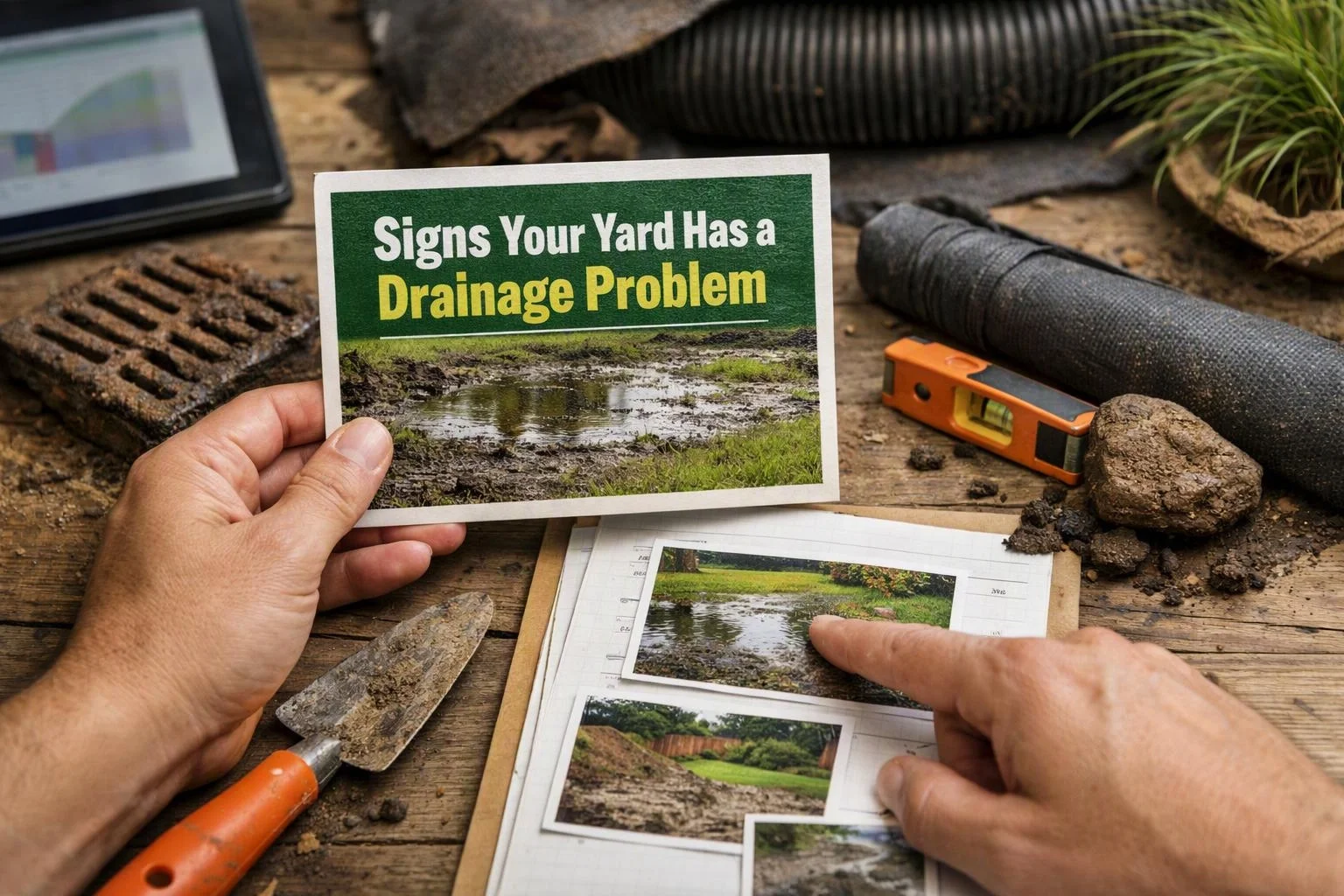
Written by Adam Gorski, landscaping expert.
What Are the Main Signs of a Yard Drainage Problem?
Yard drainage problems usually show through water that stays, moves soil, damages plants, or reaches structures.
Why Does Water Pool in the Yard After Rain?
Water pools after rain when runoff reaches a low or compacted area faster than the soil can absorb it.
Surface runoff may travel from roofs, driveways, patios, or higher parts of the yard. Low spots collect that flow, while compacted soil slows infiltration. Poor yard grading can also direct water toward one section instead of spreading it toward a safe drainage outlet.
We trace the runoff path and check whether the soil can accept the water. Our Drainage Solutions can then address the source, route, or discharge point.
Why Is the Lawn Soggy Even When It Hasn't Rained?
A soggy lawn without recent rain can point to trapped subsurface water, poor soil drainage, or an underground leak.
Subsurface water may move slowly through saturated soil and rise into the lawn. High groundwater can keep the root zone wet, while compacted or heavy soil can block normal drainage. An underground water line or irrigation leak can also create a waterlogged lawn.
We look for wet patterns, changes in soil condition, and signs that water is entering from below. You should arrange a qualified plumbing check when a leak may be involved.
What Do Washed Mulch and Soil Reveal About Runoff?
Washed mulch or soil shows that runoff is moving across the landscape with enough force to damage beds and walkways.
Mulch displacement often marks the path of surface runoff after heavy rain. Soil erosion can expose roots, lower planting beds, and carry loose material onto a walkway. The same pattern can signal commercial landscape drainage problems around entrances, parking areas, and landscape beds.
We follow the soil displacement back to its source. Then we can shape a safer runoff path, protect the bed, or improve walkway drainage.
Why Does Water Collect Near the Foundation?
Water collects near a foundation when grading, roof runoff, or soil conditions direct water toward the structure.
Foundation drainage depends on moving water away from the building. Blocked or poorly directed downspouts can release roof runoff beside the wall. Low grading can hold that water against the foundation and contribute to basement moisture or crawl space moisture.
We inspect the slope, downspout discharge, soil surface, and nearby drainage path. Damp walls, musty odors, or repeated pooling call for prompt attention before moisture causes broader damage.
How Do Drainage Problems Affect Commercial Landscapes?
Commercial drainage problems can leave courtyards flooded, wash soil onto walkways, and damage landscape beds.
Commercial property drainage needs to manage water from roofs, paved areas, and shared paths. Poor surface runoff control can create slippery walkways and muddy entrances. Courtyard drainage failures can also keep planting areas saturated and reduce the health of landscape beds.
We review how water crosses the site and where it can safely discharge. Our approach helps connect landscape drainage work with access, appearance, and routine property care.
How We Check a Yard Drainage Problem
Our drainage inspection follows the water path from its source to its possible outlet.
DIY Drainage Checks vs. Our Drainage Work
You can make safe observations, while our team evaluates the full drainage system and performs the corrective work.
A simple check can help you record where water stands or where mulch moves. Excavation, pipe placement, grading changes, and outlet work require careful site decisions.
| Factor | What you can do yourself | What we do |
|---|---|---|
| DIY drainage check | Note pooling, wet grass, erosion, and moving mulch. | Trace water flow across the whole yard. |
| Drainage solutions | Keep surface outlets clear and observe changes after rain. | Match the solution to grading, soil, runoff, and discharge conditions. |
| French drain installation | Avoid digging until underground conditions and the outlet are understood. | Plan the trench, drainage pipe, filter fabric, stone, and outlet as one system. |
| Grading correction | Mark areas where water flows or collects. | Shape the ground to guide runoff without creating a new problem. |
| Runoff control | Keep visible channels and inlets free of leaves and debris. | Design a safe route to a suitable drainage outlet. |
Which Drainage Solution Fits the Problem?
The right drainage solution depends on where water starts, how it moves, and where it can safely discharge.
A French drain can collect subsurface water and carry it through a drainage pipe. A surface drain or catch basin can collect water that travels across paved or lawn areas. A swale can guide shallow runoff through a shaped landscape feature.
Grading may solve a low spot when enough soil can be moved safely. Downspout drainage may be the better focus when roof water causes the problem. We select the approach after reviewing the full runoff path.
What Changes the Cost of Fixing Yard Drainage?
Drainage project cost changes with the affected area, soil and grading conditions, excavation needs, materials, and outlet location.
Trenching through compacted soil, removing existing landscaping, or correcting a larger grade can expand the project scope. A French drain installation also depends on the route, pipe system, stone, filter fabric, and drainage outlet.
We review these conditions during the site assessment and explain what the quote includes. You can request an exact quote after we understand the water source, the needed work, and the finished drainage path.
Questions About Yard Drainage Problems
Can poor yard drainage kill grass and plants?
Yes, poor yard drainage can damage grass and plants by keeping roots in saturated soil. We check whether water is trapped in the root zone and recommend a drainage solution that protects the planting area.
Can mulch washing onto a walkway be fixed with better drainage?
Yes, mulch washing onto a walkway can often be addressed by controlling the runoff path. We trace the flow, check the bed edge and slope, and choose a drainage or grading correction that reduces soil movement.
What should I check when water pools beside my house?
Check whether downspouts release water beside the wall and whether the ground slopes toward the foundation. Repeated pooling, damp areas, and musty odors should be reviewed through a foundation drainage inspection.
Is a French drain suitable for every yard drainage problem?
No, a French drain isn't suitable for every yard drainage problem. The right choice depends on the water source, soil, surface grade, runoff path, and available drainage outlet.