Rain Gardens, French Drains, and Swales: Landscape Drainage Options
Rain gardens slow and absorb runoff, French drains collect and redirect subsurface water, and swales guide surface flow. LandscaperIssaquahwa.com helps match the drainage method to soil, slope, water volume, and planting goals. This guide is prepared by Adam Gorski.
Written by Adam Gorski · 29 years of local experience
Request an Estimate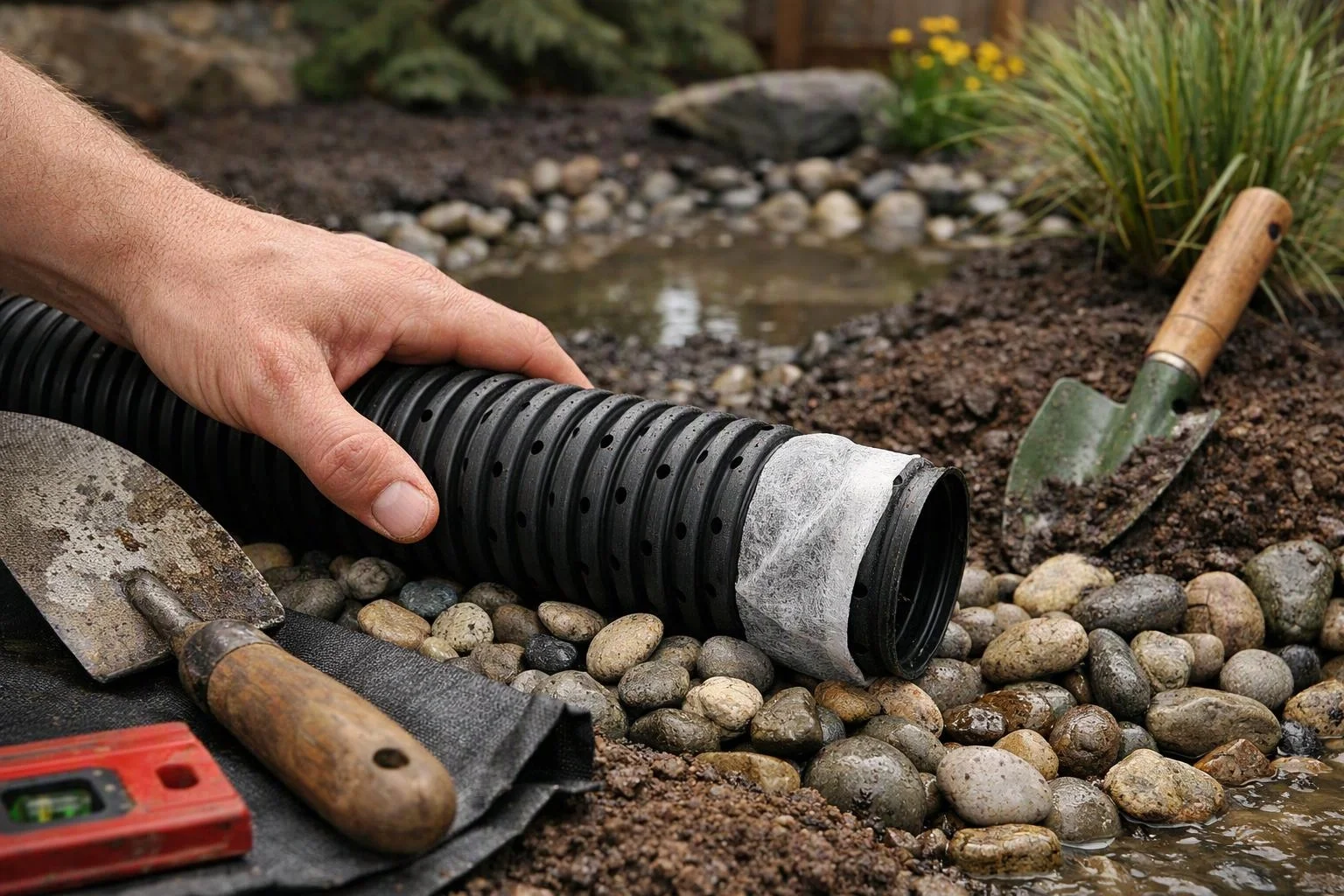
How Do Rain Gardens, French Drains, and Swales Manage Water?
Landscape drainage systems are compared by how they collect, move, absorb, and manage stormwater.
Rain gardens absorb runoff, French drains collect subsurface water, and swales guide surface water across the landscape. The right choice depends on where water starts and how it moves through your soil.
Rain gardens support infiltration in a planted basin. French drains handle water below the soil surface. Swales shape surface drainage and can slow water before erosion develops.
How Do the Three Landscape Drainage Options Compare?
Each drainage option manages a different water source and serves a different landscape purpose. The comparison below helps connect drainage function with planting and maintenance needs.
| Option | Water source | Drainage function | Planting role | Site suitability | Maintenance needs |
|---|---|---|---|---|---|
| Rain garden | Surface runoff from roofs and paved areas | Holds water and supports soil infiltration | Creates a planted basin with native plants | Suitable where soil can accept water and overflow has a safe route | Weeding, mulch care, and plant upkeep |
| French drain | Subsurface water and wet soil | Collects and redirects buried water | Usually limited planting above the drain path | Useful near foundations, slopes, and persistent wet areas | Outlet checks and surface care |
| Swale | Surface runoff across the property | Slows and guides water through a shallow channel | Supports vegetated drainage and erosion control | Useful on sloped sites with a safe overflow path | Mowing, plant care, and channel clearing |
Some landscapes need one method, while others need a connected system. We assess water flow before choosing the design.
When Do You Need a Rain Garden and French Drain Together?
A rain garden and French drain work well together when surface runoff and buried water affect the same yard. Common situations include:
We use combined systems when one method cannot manage every part of the water path. The design must protect structures, planting areas, and downstream property.
How Do Rain Gardens and French Drains Work Together?
Rain gardens and French drains work together by linking collection, infiltration, and controlled overflow. We plan the sequence around the site’s water flow.
Project scope and cost drivers include excavation, soil conditions, access, materials, planting, grading, and outlet requirements. We explain these parts in our Drainage Solutions service information.
How Does a Rain Garden Help With Drainage?
A rain garden helps with drainage by holding runoff in a planted basin and allowing water to soak into the soil.
Rain garden planning starts with the runoff source, soil infiltration, and the basin’s location. We may use soil amendment to improve drainage when the existing soil does not accept water well.
Native plants help stabilize the basin and support erosion control. A planned overflow route keeps heavy runoff from cutting channels through the landscape.
What Is a French Drain Used for in Landscaping?
A French drain is a buried drainage system that collects subsurface water and directs it to a suitable outlet.
A typical system uses a perforated drain pipe, washed gravel, and filter fabric. These parts help collect water while limiting soil movement into the pipe.
Landscaping uses include foundation drainage, wet lawn areas, slope management, and protection for planting beds. French Drain Installation must also account for the outlet and nearby site grading.
What Is a Swale in Landscape Design?
A swale is a shallow, shaped channel that slows and directs surface runoff through a landscape.
Site grading gives the swale its gentle shape and guides water without creating a harsh trench. Plants can strengthen the channel and provide vegetated drainage.
Swales support erosion control when water needs to travel across a slope. A planned overflow path helps keep water away from structures and sensitive planting areas.
How Do You Plan a Rain Garden in a Home Landscape?
Rain garden planning begins by tracing runoff and confirming that the site can accept water safely. We connect the planting design with the drainage assessment.
We review the complete water path before placing the rain garden. That approach helps the basin work as part of the landscape, not as an isolated planting bed.
What Should We Check Before Choosing a Drainage Method?
Drainage method selection depends on soil type, slope, water volume, and the existing drainage pattern. We also check where water can leave the property safely.
Our drainage assessment reviews soil infiltration, standing water, wet areas, erosion risk, and site grading. We identify property boundaries, utility locations, and the proposed outlet before work begins.
Existing pipes, downspouts, hard surfaces, and foundation conditions can change the design. A clear assessment helps prevent a drainage solution from shifting water into another problem area.
How We Connect Drainage Design With Native Plant Landscaping
Native plant landscaping connects drainage performance with a natural, finished appearance. We choose plants for the moisture conditions created by the rain garden or swale.
Rain garden planting may include wet-soil plants near the basin’s low point. Swale planting can help slow water, hold soil, and support pollinator habitat.
Mulch helps protect soil while plants establish, and the planting layout can frame the rest of the yard. Our drainage solutions are planned to support both water management and landscape appearance.
What Changes the Cost of a Landscape Drainage Project?
Landscape drainage cost depends on site access, excavation, soil, grading, materials, planting, and the chosen water outlet; we can provide an exact quote after reviewing the project.
Excavation becomes more involved when soil is compacted, rocky, or difficult to reach. Drainage materials, plant selection, grading needs, and outlet requirements also shape the project scope.
Project integration can change the work when drainage must connect with a patio, lawn, foundation area, or planting plan. We explain what the quote includes before installation begins.
How We Assess and Install the Right Drainage Option
We assess the site first, then match the drainage design to the water source and landscape goals. Our process keeps the proposed solution clear and practical.
Our team checks the completed water path and surface grading. We also review project requirements that may involve local code or inspection criteria before work starts.
Choose a Drainage Design That Fits Your Landscape
The best landscape drainage design matches the water source, soil infiltration, slope, planting goals, and available outlet. A rain garden suits planted runoff control, a French drain suits subsurface water, and a swale suits guided surface flow.
We can combine these drainage solutions when the site needs more than one water path. Our team also connects rain garden installation, French drain installation, swale design, and native plant landscaping into one coordinated plan.
To discuss your drainage needs, contact our team for a project review.
Questions About Rain Gardens, French Drains, and Swales
Can a rain garden and French drain be used in the same yard?
Yes, a rain garden and French drain can be used together when surface runoff and subsurface water affect the same area. The French drain collects buried water, while the rain garden manages suitable surface flow.
What soil is best for a rain garden?
Rain gardens need soil that can accept water while supporting healthy plant growth. We evaluate the existing soil and may use soil amendment when infiltration is too slow.
Where should a French drain discharge water?
A French drain should discharge to a suitable drainage outlet that does not harm structures, neighboring property, or planted areas. We review grading, boundaries, existing drainage, and safe overflow routes before selecting the outlet.
Do swales need plants?
Swales don't always need the same planting design, but vegetation can help protect soil and support erosion control. We select plants that fit the swale’s moisture, slope, and maintenance needs.
How can you tell whether a yard needs surface or subsurface drainage?
Surface drainage is usually needed when visible runoff travels across the ground, while subsurface drainage helps when wet soil or groundwater remains below the surface. We trace water flow and evaluate soil conditions before choosing the system.