Signs Water Is Eroding Your Yard
Water erosion often shows up as exposed roots, muddy runoff, bare soil, channels, and mulch that keeps washing away. LandscaperIssaquahwa.com can assess the flow path and plan drainage, retaining walls, or native planting to protect the yard.
Written by Adam Gorski · 29 years of local experience
Request an EstimateWhat Are the Warning Signs of Yard Erosion?
Yard erosion is visible when moving water removes soil, exposes roots, cuts channels, or carries mulch downhill.
We look for changes that show where surface runoff enters and leaves the property. Early signs can point to a drainage problem before deeper soil loss affects garden beds or slopes.
Why Is Soil Washing Away After Rain?
Soil washes away after rain when runoff moves faster than the ground can absorb it.
Heavy rain can overwhelm compacted soil, especially on a slope. Compacted soil has fewer open spaces for water to enter, so more water travels across the surface.
Loose topsoil can then move toward lower areas, drains, or nearby beds. Our team studies the slope, soil structure, and drainage paths to identify the source.
Why Are Roots Becoming Exposed in My Yard?
Roots become exposed when flowing water removes the soil covering them.
Tree roots and plant roots depend on stable topsoil for support and moisture. Water flow can uncover them gradually, or a strong runoff path can expose them quickly.
Exposed roots may also reveal a larger slope or drainage issue. We trace the water path before choosing soil retention, planting, or drainage work.
Why Are Channels Forming in My Garden Bed?
Channels form in garden beds when concentrated runoff follows the same path through loose soil.
Downspouts can direct water toward a bed, while a landscape slope can increase its speed. Repeated flow removes soil in narrow lines and may develop into deeper gullies.
We check whether the channel begins at a downspout, hard surface, upper slope, or drainage path. The starting point matters because filling the channel alone won't stop new soil movement.
Why Does Mulch Keep Washing Away?
Mulch keeps washing away when runoff crosses the bed with enough force to move loose material.
Sloped beds and open garden bed edges can let water enter quickly. Washed-out mulch often points to a larger water flow issue, not simply poor mulch placement.
We examine the bed edge, soil cover, slope, and nearby downspout discharge. The solution may involve slowing water, redirecting it, or stabilizing the soil below the mulch.
How We Trace the Source of Yard Erosion
Our drainage assessment traces water entry points, flow paths, and erosion patterns across the yard.
We use the visible damage as a map of how water moves. Our process connects the soil loss to the slope, downspouts, hard surfaces, and lower areas.
Which Yard Erosion Solution Fits the Damage?
The right yard erosion solution depends on where water enters, how it moves, and how much soil has shifted.
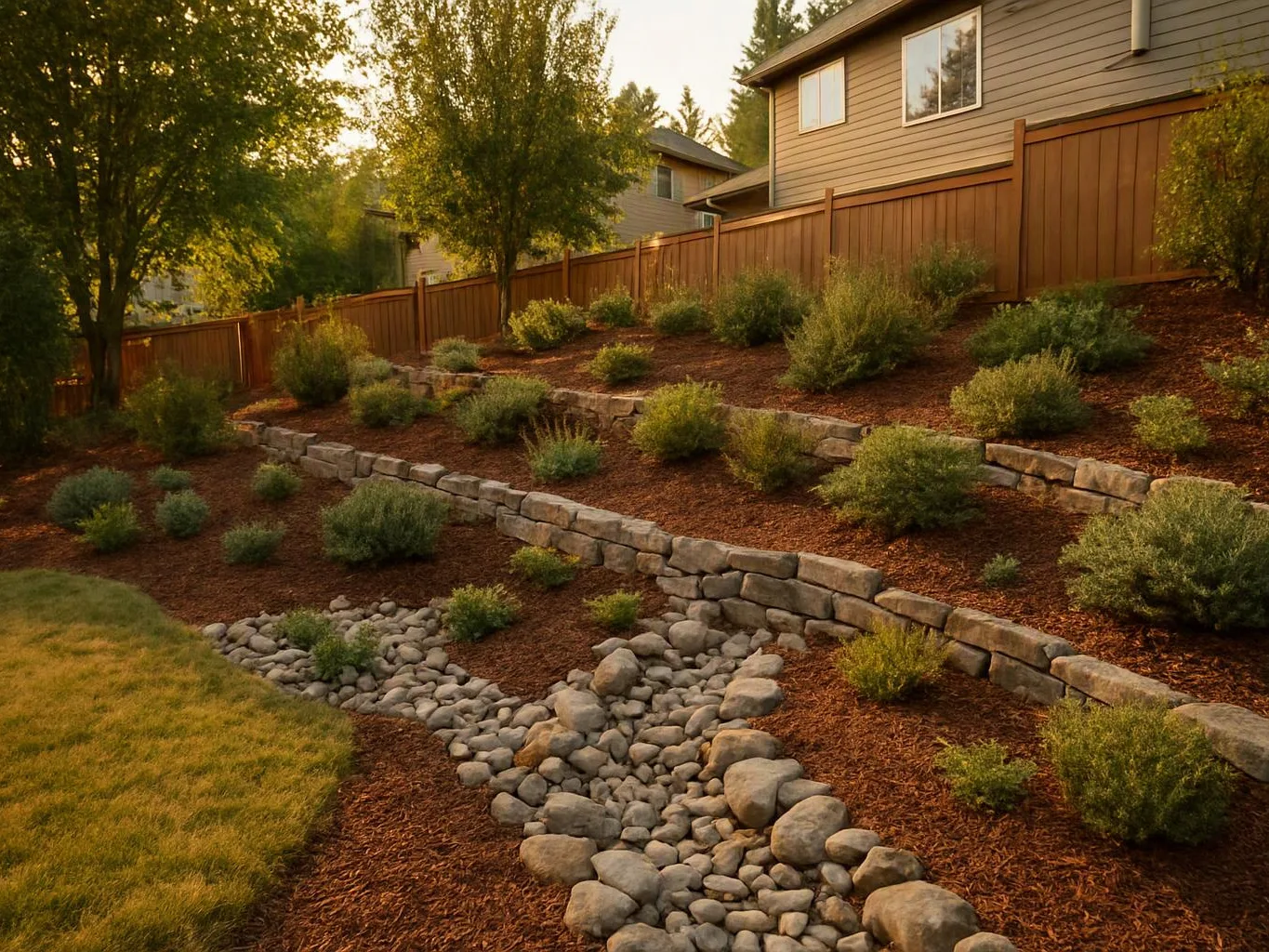
Our team may recommend drainage solutions, retaining wall installation, native plant landscaping, or a combination. We match the work to the slope, soil condition, and amount of surface runoff.
Our Drainage Solutions planning focuses on controlling water before it causes more soil loss. Larger slope problems may need structural support or stronger root systems.
When Drainage Improvements Make Sense
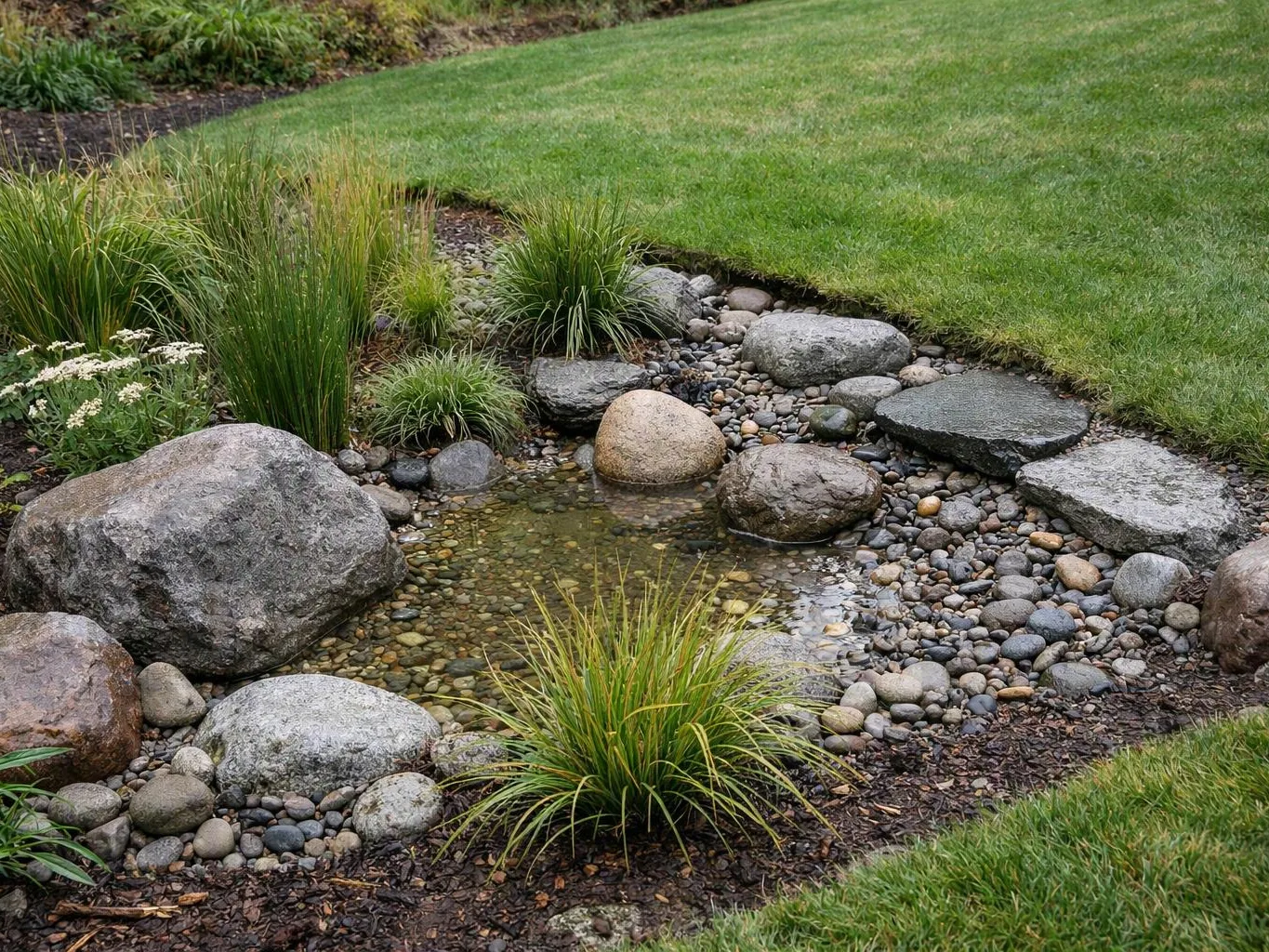
Drainage improvements make sense when downspout discharge or surface drainage sends water across vulnerable soil.
We may plan water diversion, improved discharge points, or another drainage path. The goal is to reduce surface runoff before it cuts channels or carries soil downhill.
When Retaining Walls Help Hold the Slope
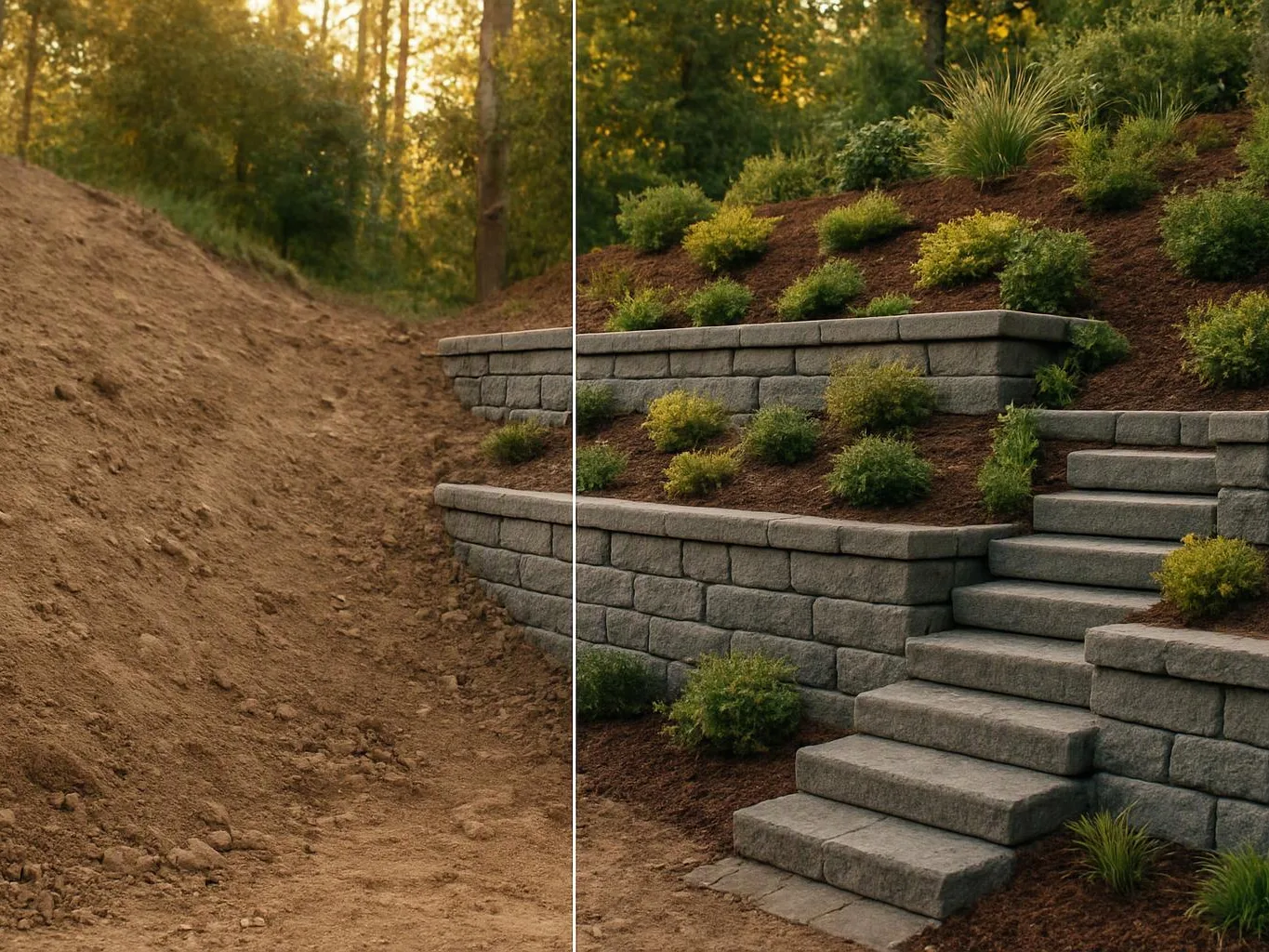
Retaining wall installation helps when a sloped yard needs support to hold soil in place.
Our team considers wall drainage, soil pressure, and the shape of the slope. Proper drainage behind the wall helps protect the structure and supports long-term soil retention.
When Native Plants Can Protect Exposed Soil
Native plant landscaping can protect exposed soil when root systems and ground cover can establish across the affected area.
Plants help slow water near the surface and support soil stabilization. We select planting approaches that fit the slope, moisture conditions, and plant establishment needs.
DIY Checks Compared With Calling Us
A DIY yard inspection can help you record visible changes, but it can't always reveal the full drainage path.
Our team connects surface signs with drainage planning, retaining wall installation, and native plant landscaping when the damage needs coordinated work.
| Factor | What you can do yourself | What we do |
|---|---|---|
| Visible signs | Note muddy water, bare soil, exposed roots, and washed-out mulch. | We assess the signs and connect them to likely erosion patterns. |
| Water path | Observe where water collects during safe viewing conditions. | We trace entry points, slopes, downspouts, and discharge areas. |
| Erosion assessment | Photograph changes and monitor recurring soil movement. | We determine whether the damage calls for drainage or slope stabilization. |
| Planned work | Keep soil covered and avoid disturbing unstable areas. | We plan drainage solutions, retaining walls, or native planting to fit the site. |
What Does a Yard Erosion Plan Include?
A yard erosion plan identifies the water path, the damaged areas, and the work needed to protect the soil.
Our team reviews site conditions, including the slope, soil movement, drainage paths, and affected planting areas. We then define a project scope that may include drainage solutions, retaining wall installation, or native plant landscaping.
We explain what each part of the plan addresses and prepare a quote based on the site. The cost depends on access, water control needs, structural work, planting, and the amount of soil protection required.
Author: Adam Gorski
How Can You Prevent More Soil Loss?
You can reduce soil loss by keeping soil covered, slowing runoff, and correcting water paths.
Contact us when erosion keeps returning or affects a slope, foundation area, or mature tree. We can review the water flow and explain the work included in your quote.
Request a yard erosion assessment
Get a Free EstimateQuestions About Yard Water Erosion
Can yard erosion damage tree roots?
Yes, yard erosion can damage tree roots by removing the soil that supports and protects them. Our team checks exposed roots with the surrounding slope and water flow before planning soil retention or drainage work.
Can mulch stop water erosion in a garden bed?
Mulch can reduce exposed soil, but mulch alone may not stop concentrated runoff. We look for the water source and may recommend drainage, planting, or slope support when mulch keeps washing away.
When does yard erosion require a retaining wall?
Yard erosion may require a retaining wall when a sloped area can't hold soil with drainage and planting alone. Our team evaluates slope support, wall drainage, access, and the amount of soil movement before recommending retaining wall installation.
Can native plants help control erosion?
Yes, native plants can help control erosion when their root systems and ground cover suit the site. Our team considers soil, moisture, slope, and plant establishment before planning native plant landscaping.
Related Resources
Choosing a Retaining Wall: Comparing Materials and Installation Quotes
What Goes With ItRain Gardens, French Drains, and Swales: Landscape Drainage Options
What Goes With ItHow Native Plants Can Support a More Functional Landscape
What Goes With ItDesigning a Landscape for Lower Maintenance and Smarter Water Use